
Paddling Lake Superior’s North Shore is on every serious kayaker’s bucket list. This 150-mile stretch of Minnesota coastline delivers some of the most dramatic sea kayaking in the Lower 48, towering basalt cliffs, hidden sea caves, crystal-clear water, and the kind of raw wilderness that reminds you why you paddle in the first place.
I have spent two decades paddling the Great Lakes, and the North Shore remains my favorite stretch of freshwater coastline in the Midwest. The combination of accessible launch points, challenging conditions, and sheer visual drama makes it a destination that rewards both day-trippers and expedition paddlers. This guide covers everything you need to know to plan your own North Shore paddling adventure, from where to launch to what gear to bring and how to read the lake’s famously changeable conditions.
Table of Contents
Why the North Shore is Special
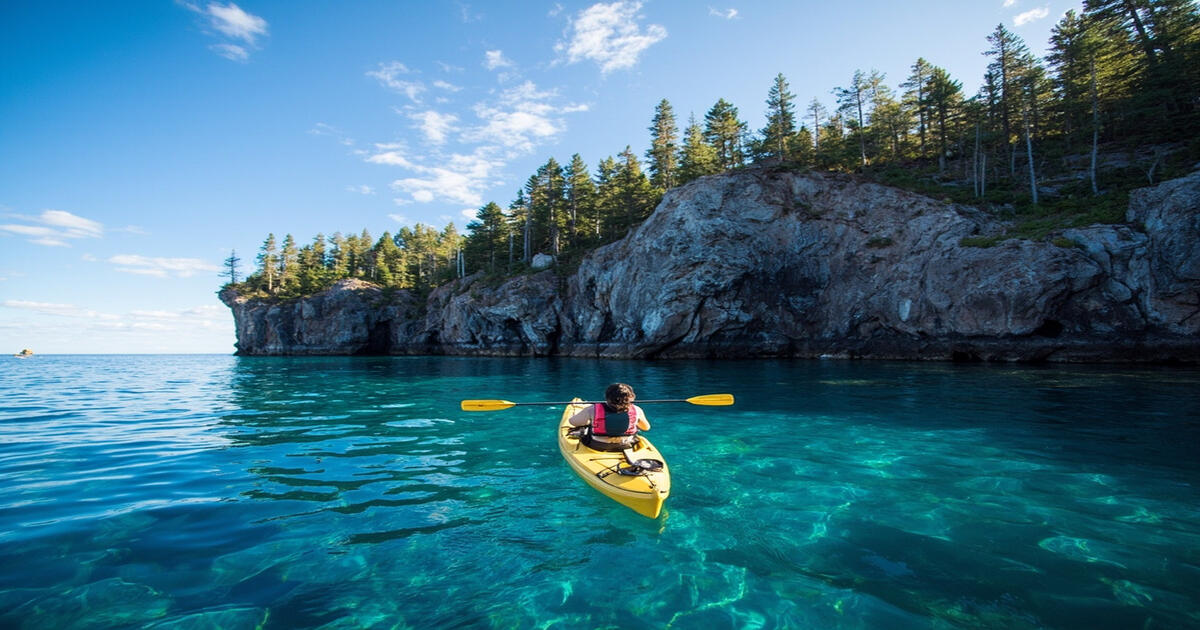
Lake Superior is the largest freshwater lake in the world by surface area and the third-largest by volume. On the North Shore, it behaves more like a inland sea than a lake. Swells can build to 6-8 feet during storms. Water temperatures rarely exceed 55°F even in midsummer. Fog rolls in without warning. And the shoreline is almost entirely undeveloped wilderness from Duluth to the Canadian border.
What makes this coastline special for kayakers is the geology. The North Shore is built on ancient basalt lava flows that created dramatic cliffs, sea stacks, and arch formations. Places like Palisade Head, Shovel Point, and the Sea Caves near Cornucopia offer paddling scenery that rivals anything on the Atlantic or Pacific coasts, minus the salt water and sharks.
The water is also remarkably clear. On calm days, you can see 30-40 feet down through the cold, clean water. This clarity makes for exceptional underwater visibility and creates that distinctive deep blue color that photographers chase.
Best Sections for Different Skill Levels
Beginner: Grand Marais Harbor to Artists’ Point
This 2-mile round-trip paddle is the perfect introduction to North Shore conditions. The harbor at Grand Marais provides protected water, and the short paddle to Artists’ Point offers your first taste of the basalt formations that define this coast. On calm days, this is a beginner-friendly trip with easy bailout options.
Launch: Grand Marais municipal harbor (free public access)
Distance: 2 miles round trip
Conditions: Protected harbor, exposed only on the final approach to Artists’ Point
What you’ll see: Basalt arch formations, harbor seals, lighthouse views
Intermediate: Split Rock Lighthouse to Crystal Bay
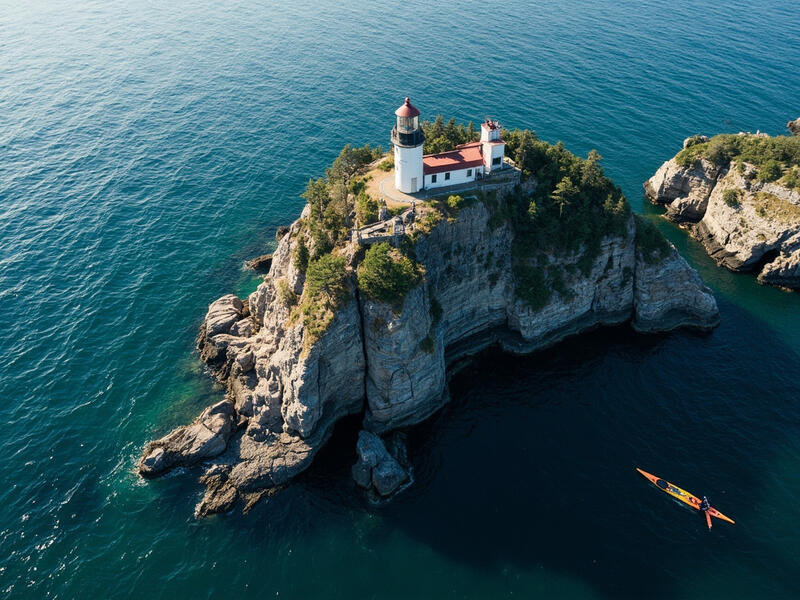
This 8-mile stretch is the most photographed section of the North Shore for good reason. You start beneath the iconic Split Rock Lighthouse, paddle past 200-foot cliffs, and can explore sea caves and arches at Shovel Point. The conditions here are more exposed, and swells can make the cave exploration challenging.
Launch: Split Rock Lighthouse State Park (parking fee required)
Distance: 8 miles one way, 16 miles round trip
Conditions: Moderately exposed, cliff rebound waves possible
What you’ll see: Split Rock Lighthouse, Palisade Head cliffs, Shovel Point sea caves
Advanced: The Sea Caves of Cornucopia to Sand Island
This is the crown jewel of North Shore paddling. The sea caves near Cornucopia (often called the Apostle Islands of Minnesota) feature dozens of arches, tunnels, and collapsed caves that you can paddle through. The 12-mile crossing to Sand Island in the Apostles is for experienced paddlers only, this is open water with no bailout options.
Launch: Meyers Beach near Cornucopia (free, limited parking)
Distance: 6-12 miles depending on route
Conditions: Highly exposed, open water crossings, cliff rebound
What you’ll see: Sea caves, arches, tunnels, Apostle Islands views
Reading Lake Superior Conditions
Lake Superior demands respect. The lake creates its own weather, and conditions can change from flat calm to dangerous in under an hour. Here’s what to watch:
Wind and Waves
The prevailing wind on the North Shore blows from the northeast, which pushes waves directly onto the cliffs. A 15-knot wind can generate 3-4 foot swells quickly. The key is to check the NOAA marine forecast before launching and to have a bailout plan for every mile of your route. If the forecast calls for winds over 20 knots, cancel your paddle.
Water Temperature
Even in July, water temperatures on Lake Superior hover between 45-55°F. This is cold enough to induce cold-water shock in minutes. A wetsuit is the minimum protection; a drysuit is strongly recommended for any extended paddling or if you plan to explore sea caves where capsizing is a real risk.
Fog
Fog is the silent hazard on Lake Superior. Warm, humid air moving over cold water creates dense fog banks that can reduce visibility to zero in minutes. Always carry a compass and GPS, and know your shoreline bearings. If fog rolls in, head to shore immediately, do not try to navigate in zero visibility.
Essential Gear for North Shore Paddling
The gear you bring to Lake Superior can be the difference between a memorable adventure and a dangerous situation. Here’s what experienced North Shore paddlers consider mandatory:
The Kayak: Sea Touring Kayak Required
A recreational kayak is not appropriate for North Shore conditions. You need a sea touring kayak with:
- Minimum 15-foot length for tracking in swells
- Bulkheads in both bow and stern compartments
- Rudder or skeg for handling in crosswinds
- Sea kayak geometry (shallow V hull, hard chines)
For paddlers serious about Lake Superior, a proper sea touring kayak is essential. The Wilderness Systems Tsunami 125 is a proven choice for paddlers transitioning to big water, with a 12.5-foot length that handles swells better than recreational designs. For more advanced paddlers, a 16-17 foot expedition kayak like the Eddyline Sitka provides the speed and storage capacity for multi-day North Shore expeditions.
Cold Water Protection: Drysuit or Wetsuit
Cold water protection is non-negotiable. The standard recommendation for Lake Superior is a drysuit with insulating layers underneath. A 4/3mm wetsuit is the absolute minimum for short day trips in midsummer. For sea cave exploration or any extended paddling, a drysuit is strongly recommended.
Safety Equipment
- VHF radio: Marine channel 16 for emergencies. Cell service is unreliable on the North Shore.
- GPS or chart plotter: The shoreline looks similar in fog; you need precise navigation.
- Bilge pump and paddle float>/strong>: For self-rescue in cold water.
- Towing system: Essential for group paddling on exposed water.
- First aid kit: Include hypothermia treatment supplies.
Safety Considerations
The North Shore has no lifeguard stations, no rescue services, and no cell service in most areas. You are entirely self-reliant. Here are the safety rules that experienced paddlers follow:
- Never paddle alone. The buddy system is mandatory. A solo paddler who gets into trouble has no backup.
- File a float plan. Leave your route, expected return time, and emergency contacts with someone on shore.
- Know your bailout points. Every mile of the North Shore has cliffs. Identify the rare beaches and coves where you can land in an emergency.
- Carry a signaling device. A whistle, mirror, and flares are standard for sea kayaking. The VHF radio is your lifeline.
- Check the weather obsessively. Conditions on Lake Superior can change in minutes. If you are unsure, stay on shore.
Camping and Logistics
For multi-day trips, the North Shore offers excellent camping at Minnesota State Parks. Split Rock Lighthouse State Park, Tettegouche State Park, and Grand Portage State Park all have paddle-in campsites. Reservations are essential in summer and can be made through the Minnesota State Parks reservation system.
Water sources are abundant, you are on the largest freshwater lake in the world. However, filtration is recommended due to potential runoff from the cliffs. Campfires are permitted in designated fire rings only, and firewood must be purchased locally (do not transport firewood across county lines to prevent pest spread).
The towns of Grand Marais and Two Harbors provide the last reliable supply stops before heading into the wilderness. Stock up on food, water, and fuel there. Grand Marais has an excellent outfitter (Duluth Pack) that can handle last-minute gear needs and kayak rentals.
Frequently Asked Questions
Can I paddle Lake Superior in a recreational kayak?
No. Recreational kayaks lack the necessary speed, tracking, and safety features for Lake Superior conditions. A sea touring kayak with bulkheads is mandatory.
When is the best time to paddle the North Shore?
July and August offer the most stable conditions and warmest water (relatively speaking). June can be foggy; September brings cooler temperatures but spectacular fall colors and fewer crowds.
Do I need a sea kayaking certification?
While not legally required, a ACA or BCU sea kayaking certification is highly recommended. The skills taught in these courses, self-rescue, assisted rescue, navigation, and rough water handling, are exactly what you need for Lake Superior.
Are there kayak rentals available on the North Shore?
Yes. Duluth Pack in Grand Marais and Outfitters North Shore offer sea kayak rentals by the day. They also provide guided tours for beginners who want to experience the North Shore with professional support.
What is the water temperature in midsummer?
Surface temperatures range from 45-55°F in July and August. This is cold enough to cause cold-water shock and hypothermia within minutes. A drysuit or thick wetsuit is mandatory.
