There’s a moment every touring paddler hits, usually around mile eight of a long day: your shoulders are burning, your cadence is falling apart, and the cheap paddle that came with your boat suddenly feels like it’s made of rebar and plywood. That’s the moment the upgrade question stops being theoretical. The Werner Camano 2-piece straight shaft is the paddle most often named as the answer, a $349 fiberglass touring paddle with a 4.7-star average over 59 Amazon ratings, and owner reviews full of people who sound genuinely annoyed they didn’t buy it sooner. Here’s what the money actually buys.
Werner Camano: The Touring Paddle, Defined
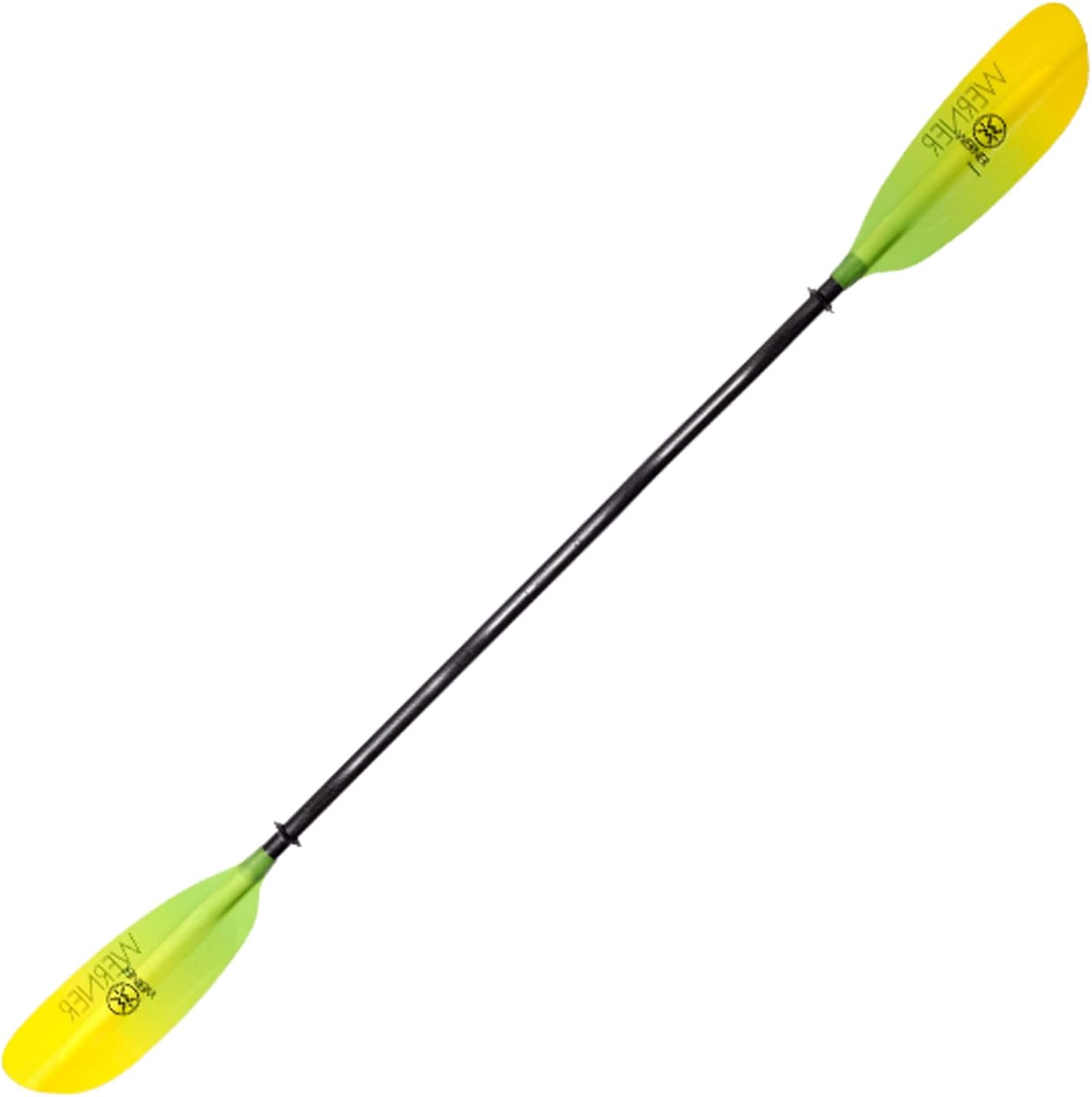
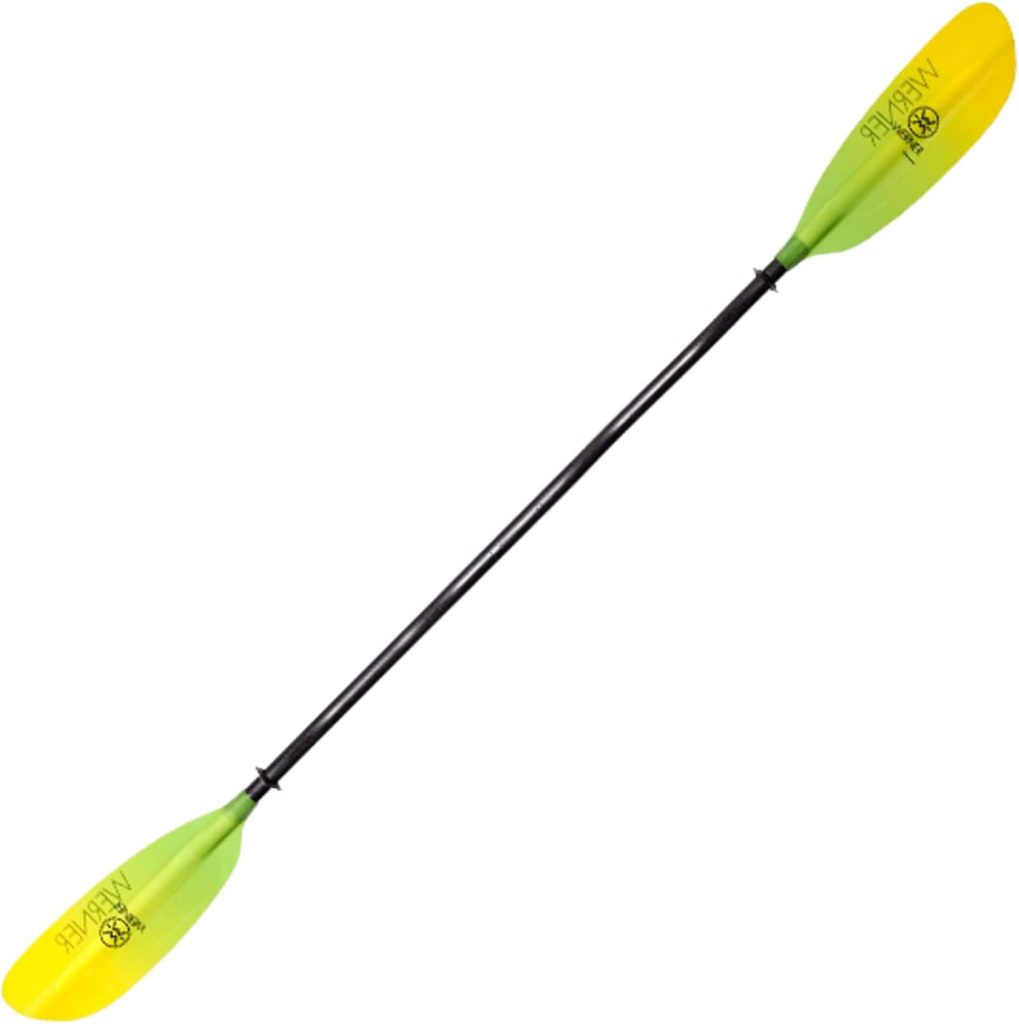
The Camano is Werner’s best-known low-angle touring design, built around what the brand calls its most popular, award-winning blade shape. The formula: mid-size fiberglass blades (650 cm², 52 × 16.5 cm) on a carbon-fiberglass blend straight shaft, weighing 761 grams (26.75 oz) total, joined by Werner’s Smart View Adjustable ferrule. It’s a 2-piece paddle that the company claims, and owners back up, locks together with the solid feel of a one-piece.
It’s aimed squarely at low-angle paddling: the relaxed, horizontal stroke style that touring, sea kayaking, and long recreational days are built on. If your stroke is more vertical and aggressive, that’s a different blade (we’ll get to that in the downsides). The Camano comes in 220, 230, and 240 cm lengths, in standard or small shaft diameter, and in gradient colorways that are, as one owner put it, “gorgeous” in person, with a slightly translucent laminate that glows against the water. Check current Camano pricing on Amazon across lengths and colors.
The Feel: Why the Blade Matters More Than the Weight
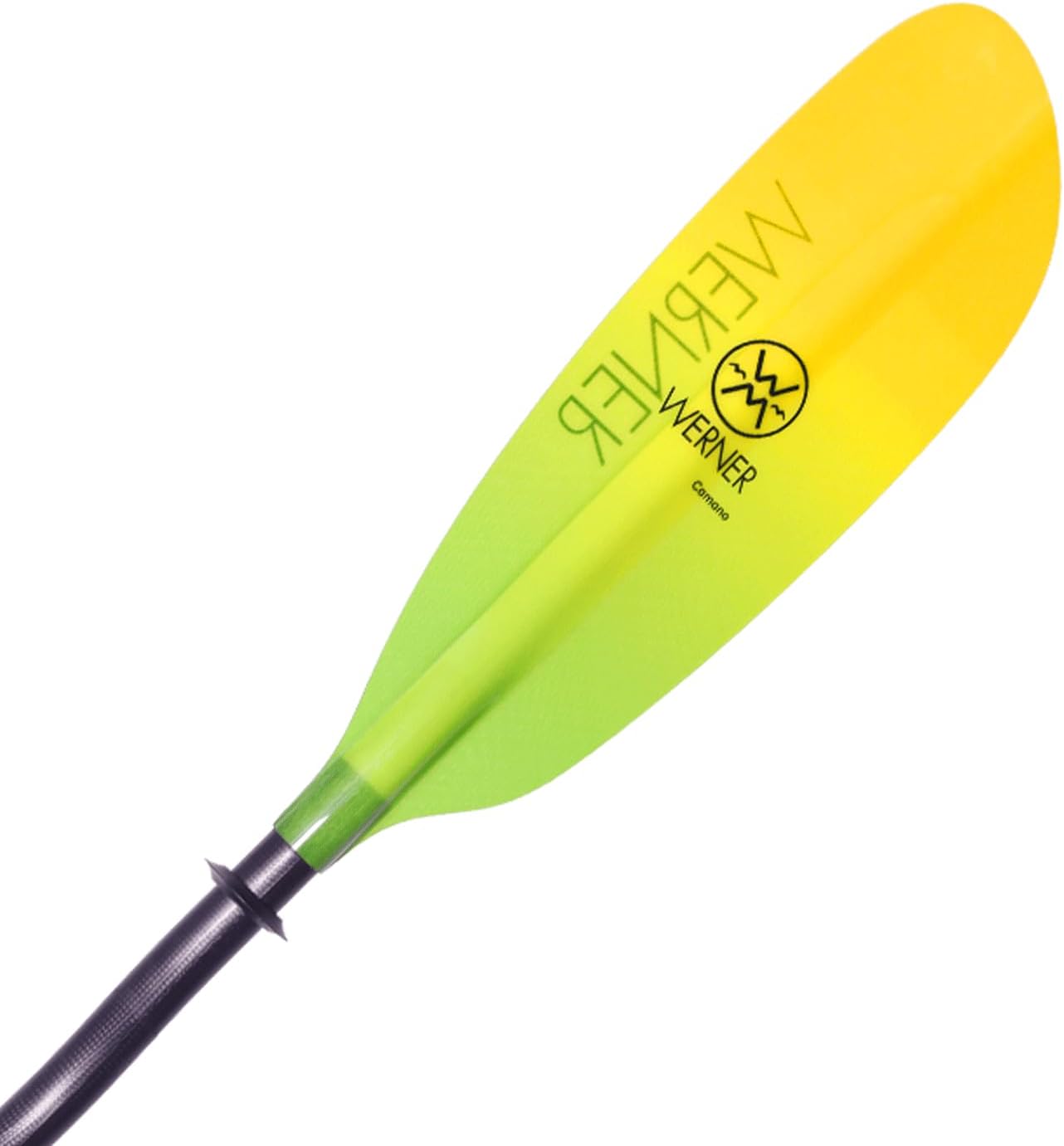
Everyone talks about paddle weight, but the Camano’s real trick is the dihedral blade face, the subtle ridge down the power face that splits water flow left and right. Cheap flat blades flutter and wobble mid-stroke, and your forearms spend all day micro-correcting for it. The Camano’s stiff fiberglass dihedral eliminates that flutter entirely: the blade plants, holds, and releases cleanly with no wobble and no wasted energy. Owners describe it as entering and exiting the water “effortlessly,” and that clean release is where the all-day fatigue savings actually come from, not just the 761-gram scale reading.
The mid-size blade is the other deliberate choice. Big blades feel powerful for ten strokes and exhausting for ten thousand; at 650 cm² the Camano moves real water per stroke but keeps cadence easy, which is exactly what a low-angle touring stroke rewards. One owner took it on a four-hour Lake Superior trek along Pictured Rocks and reported the fatigue factor was “almost nil”, the single most common theme across the review pool. Another, upgrading from a $60 entry paddle, called the difference “remarkable,” and that delta, from flutter and flex to a silent, planted stroke, is what $349 buys. See what other paddlers say on the Camano’s Amazon listing.
Build Quality and the Smart View Ferrule
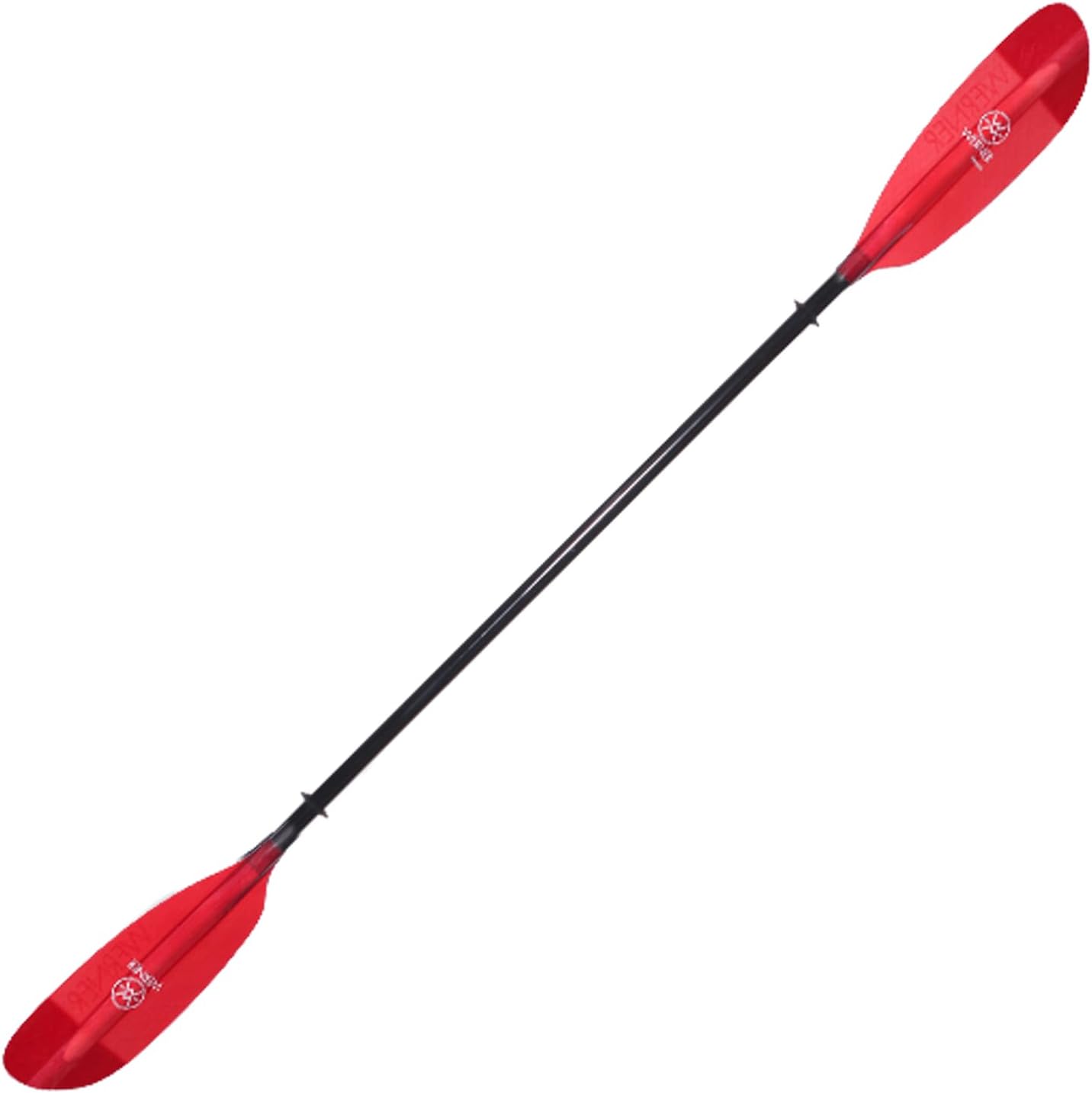
Two-piece paddles live and die by the ferrule, the joint is where cheap paddles develop wobble, corrosion-seize, and the dreaded mid-lake separation. Werner’s Smart View Adjustable ferrule is the best-regarded system in the business: it locks with the stiffness of a one-piece shaft and adjusts feather angle from 0° to 60° in precise 5° steps, with a visible window so you can see your setting instead of guessing. Whether you paddle feathered into headwinds or flat for simplicity, you can dial it in seconds, no tools, no buttons to fight with cold hands.
The carbon-blend shaft balances flex and strength with a warm, comfortable feel in cold water (carbon doesn’t ice your hands like aluminum), and the fiberglass blades take rock scrapes and beach landings better than full-carbon blades, which trade toughness for grams. Werner backs the paddle with a one-year manufacturer warranty, and the brand’s build reputation, hand-built in Sultan, Washington, is the reason Camanos hold resale value that budget paddles don’t. It sits a step below full-carbon flagships in weight, but at $100+ less, many touring paddlers find it the value peak of the Werner line.
Getting the Fit Right: Length and Shaft Diameter
A premium paddle in the wrong size is just an expensive mistake, so two choices matter here. Length: the Camano comes in 220, 230, and 240 cm. Most average-height paddlers in average-width touring kayaks land on 230 cm; shorter paddlers or narrower boats go 220, taller paddlers or wider fishing and recreational kayaks go 240. Our paddle length guide walks through the sizing math in detail. Shaft diameter: Werner offers standard and small diameter shafts, their rule of thumb is hand length under 6.5 inches (wrist crease to fingertip) suits the small shaft. Paddlers with smaller hands consistently report the small-diameter option reduces grip fatigue significantly on long days.
Who Should Spend $349, and Who Shouldn’t
Honesty section, because this paddle isn’t for everyone. Skip it if you’re a high-angle paddler, the Camano’s blade shape is optimized for low-angle strokes; aggressive vertical-stroke paddlers should look at its sibling shapes or something like the high-angle Aqua Bound Whiskey we reviewed. Skip it if you paddle a few weekends a summer, a solid mid-range paddle like the options in our best kayak paddles roundup, or a Sting Ray-class paddle at half the price, covers casual use fine. And fiberglass blades aren’t indestructible, they shrug off normal use but repeated rocky whitewater abuse is whitewater-paddle territory, not touring-paddle territory.
Buy it if you tour regularly, if long days leave your shoulders wrecked, if you’re fighting flutter on every stroke, or if you’ve already broken or outgrown a budget paddle. The owners who love this paddle most are the ones who upgraded after learning what cheap costs, several literally said they wished they’d done it years earlier.
Frequently Asked Questions
Is the Werner Camano worth $349?
For regular touring paddlers, yes, the cost-per-hour math over years of use favors a paddle that eliminates flutter and cuts fatigue. Owner reviews repeatedly describe it as the upgrade they should have made sooner. Casual once-a-month paddlers will be equally happy at half the price.
What’s the difference between the Camano and cheaper Werner paddles?
Entry Werner paddles use heavier fiberglass-reinforced nylon blades and simpler ferrules. The Camano steps up to lighter fiberglass laminate blades with the dihedral power face, a carbon-blend shaft, and the Smart View Adjustable ferrule, the combination that delivers the one-piece feel and all-day stroke quality.
What length Camano should I buy?
Most paddlers in typical touring kayaks fit the 230 cm. Go 220 cm if you’re shorter or paddle a narrow boat, 240 cm if you’re tall or paddle a wide recreational or fishing kayak. When between sizes, the longer option is the safer touring choice.
Straight shaft or bent shaft?
The straight shaft reviewed here suits most paddlers and costs about $110 less. The bent-shaft version reduces wrist extension for high-mileage paddlers with wrist issues, worth it if your wrists complain after long days, unnecessary for most.
Can the Camano handle whitewater or surf?
It’s a touring paddle, it tolerates the occasional rock scrape and rough-water day, but dedicated whitewater or surf use calls for thicker, tougher whitewater blades. Repeated rock gardening will shorten any fiberglass touring blade’s life.
Verdict
The Werner Camano is the rare premium product where the reviews aren’t defending the price, they’re celebrating it. A flutter-free dihedral blade, 761 grams of balanced swing weight, the best adjustable ferrule in the industry, and sizing options that actually fit real humans make it the touring paddle to buy once and stop thinking about. If paddling long is your thing, the Werner Camano on Amazon is the upgrade your shoulders have been asking for.
