
Finding the right kayak as a beginner can feel overwhelming. With hundreds of models on the market ranging from $200 to $2,000, how do you know which one won’t sink your wallet or your enthusiasm? After testing dozens of entry-level kayaks over the past few years, I’ve found that inflatable kayaks offer the perfect balance of affordability, portability, and performance for most first-time paddlers. In this guide, I’ll break down the best inflatable kayaks for beginners that actually deliver on their promises.
Unlike hard-shell kayaks that require roof racks, garage storage, and a hernia risk every time you load them, inflatable kayaks deflate to the size of a large duffel bag. You can toss one in your trunk, check it on a flight, or store it in a closet. But not all inflatables are created equal, some paddle like pool toys while others rival hard-shell performance. Here’s what actually works.
What to Look for in a Beginner Inflatable Kayak
Before diving into specific models, understand what separates a decent inflatable from a waste of money:
- Drop-stitch construction: The floor should use drop-stitch technology (thousands of threads connecting top and bottom layers) for rigidity. Without it, you’ll feel like you’re paddling a hammock.
- Multiple air chambers: Safety 101. If one chamber pops, the others keep you afloat. Never buy a single-chamber kayak.
- Weight capacity: Add your weight plus gear, then add 50 pounds. If you’re 180 pounds with 20 pounds of gear, look for at least 250-pound capacity.
- Setup time: Quality inflatables take 5-10 minutes with a decent pump. If it takes 20 minutes, the design is inefficient.
- Tracking: Beginner kayaks should have a removable skeg (fin) to help you paddle straight. Without one, you’ll zigzag across the lake like a confused goose.
The 5 Best Inflatable Kayaks for Beginners
1. Intex Challenger K1, Best Budget Pick
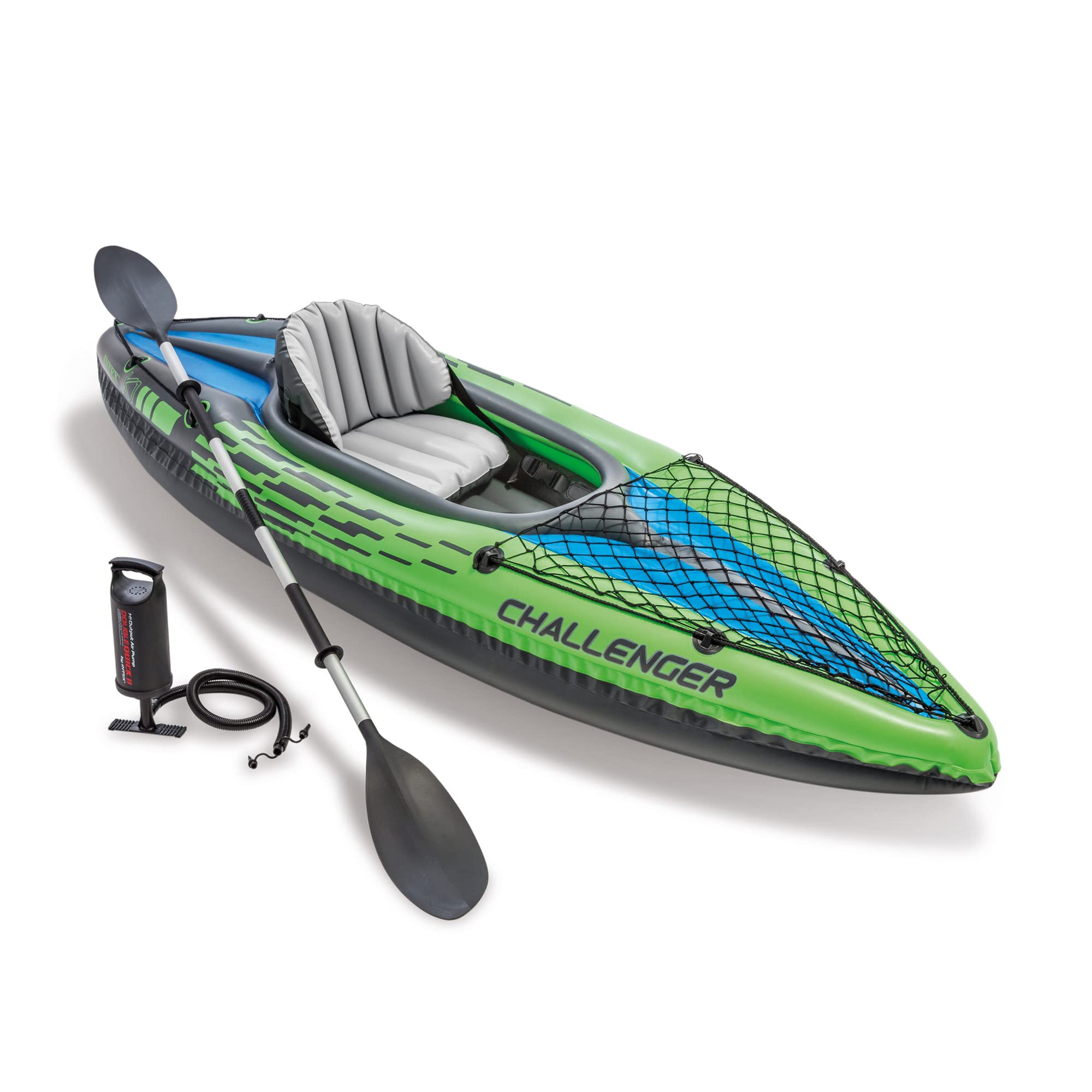
The Intex Challenger K1 is the gateway drug of inflatable kayaking. At around $150, it’s cheaper than a dinner for two at a decent restaurant, yet it actually floats, tracks reasonably well, and includes a paddle and pump.
What surprised me most was the durability. The rugged vinyl construction handles scrapes against rocks and docks better than you’d expect at this price. The cockpit is snug, this is a solo kayak for smaller paddlers (under 220 pounds), but the included seat is surprisingly comfortable for short trips.
Specs: 9 feet long, 220-pound capacity, 27 pounds, includes paddle, pump, and carry bag
Best for: Absolute beginners, apartment dwellers, casual lake paddling
2. Sevylor QuickPak K5, Best for Travel
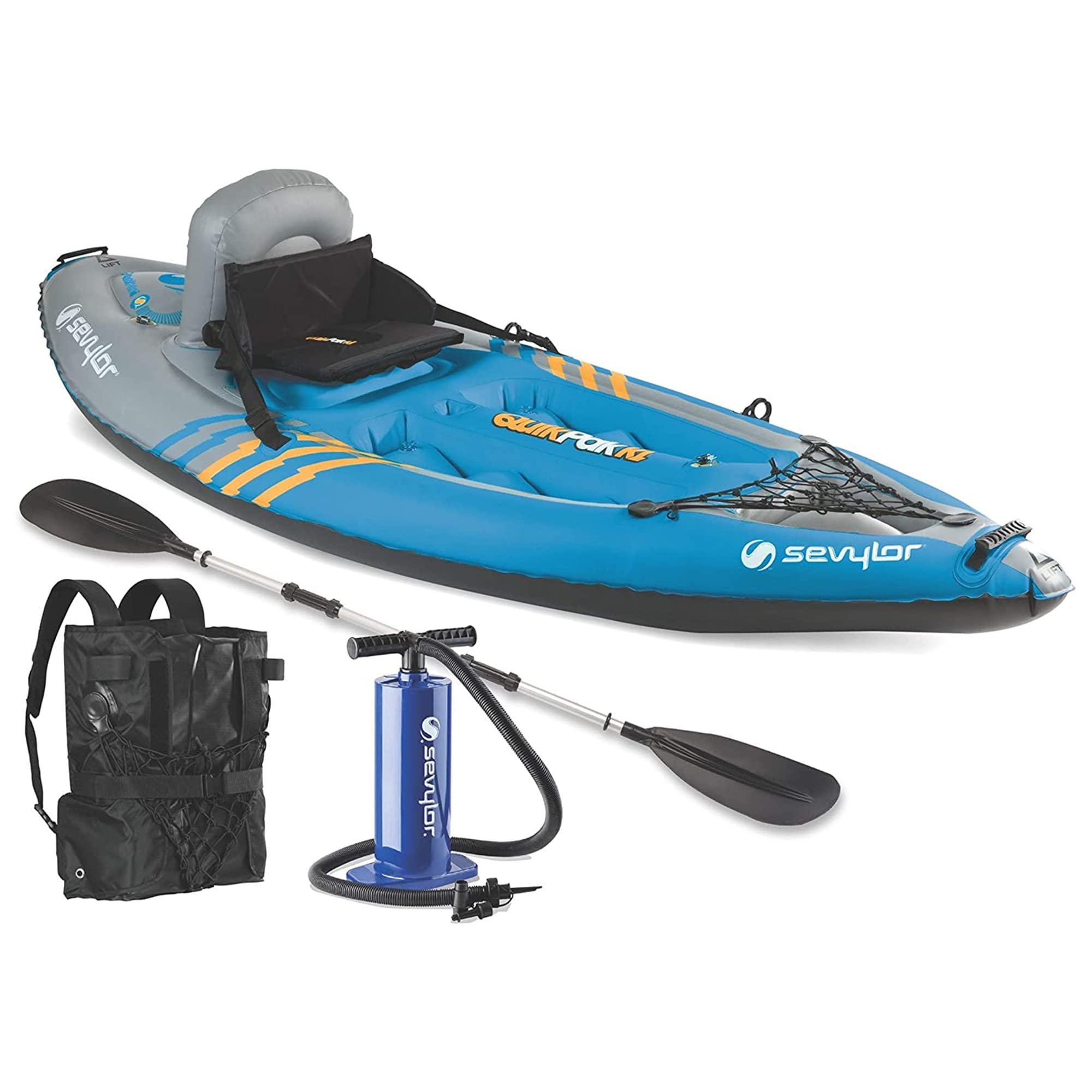
The Sevylor QuickPak K5 folds into a backpack that’s actually comfortable to wear. I took one on a flight to Florida last year, checked it as regular luggage, and was paddling within 20 minutes of landing. Try doing that with a hard-shell.
The 24-gauge PVC construction is beefier than the Intex, and the multiple air chambers provide real peace of mind. Setup takes about 7 minutes with the included double-action pump. The seat is basic but functional, I’d upgrade it if you plan multi-hour trips.
Specs: 10 feet long, 250-pound capacity, 30 pounds, backpack carry system included
Best for: Travelers, hikers who want to paddle remote lakes, anyone without storage space
3. Advanced Elements Island Voyage 2, Best Tandem
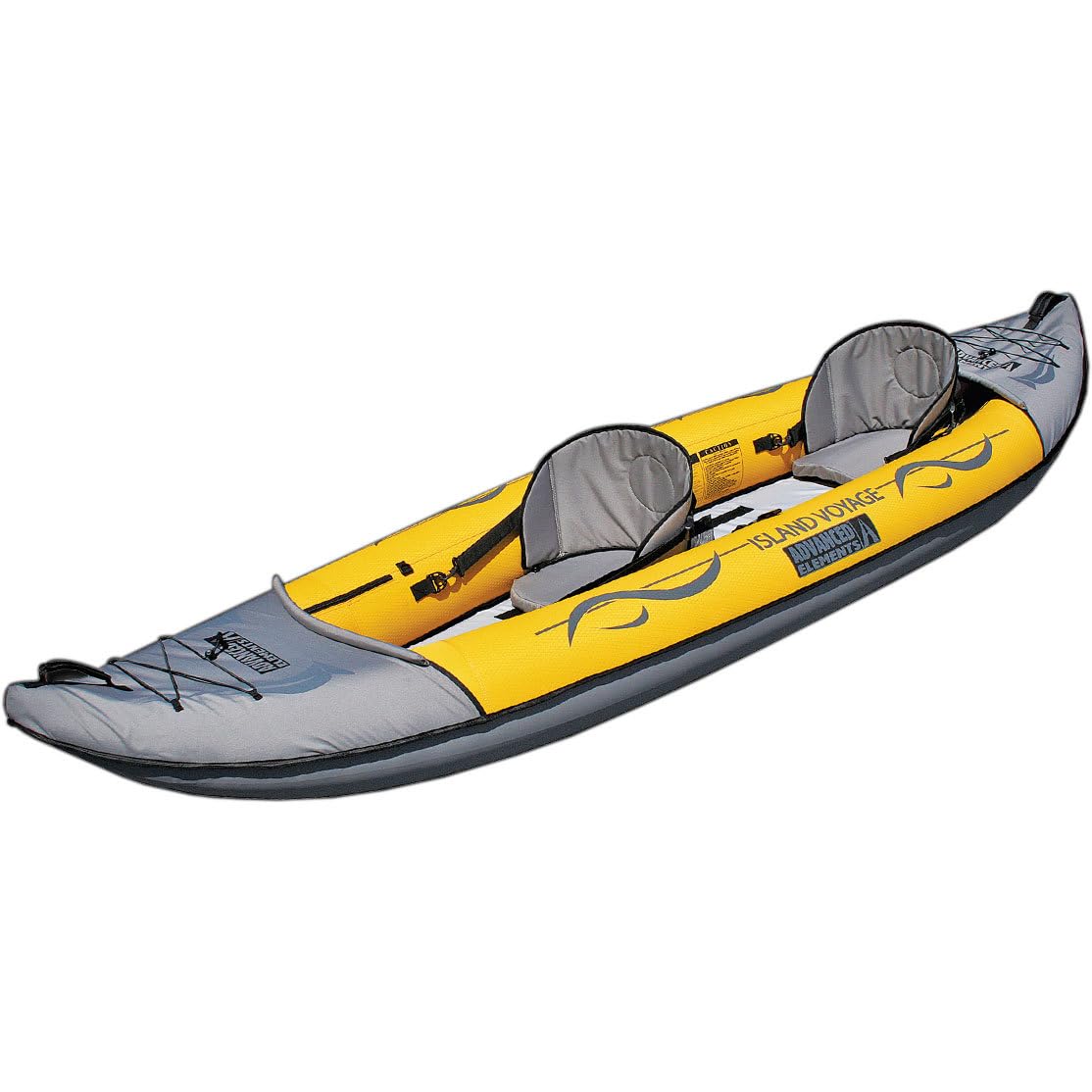
The Advanced Elements Island Voyage 2 is where inflatables start feeling like real kayaks. The aluminum rib frame in the bow and stern gives it tracking ability that rivals hard-shells. I paddled this tandem with my sister on Lake Minnetonka, and we covered 8 miles without fighting the kayak’s direction once.
The PVC tarpaulin hull is bomber, I’ve scraped it over rocks in shallow rivers with zero damage. The seats are adjustable and surprisingly supportive. At 32 pounds, it’s heavier than solo options but still manageable for two people.
Specs: 11.5 feet long, 400-pound capacity, 32 pounds, convertible solo/tandem
Best for: Couples, parents with kids, anyone wanting hard-shell performance in an inflatable
4. Driftsun Rover 220, Best for Whitewater
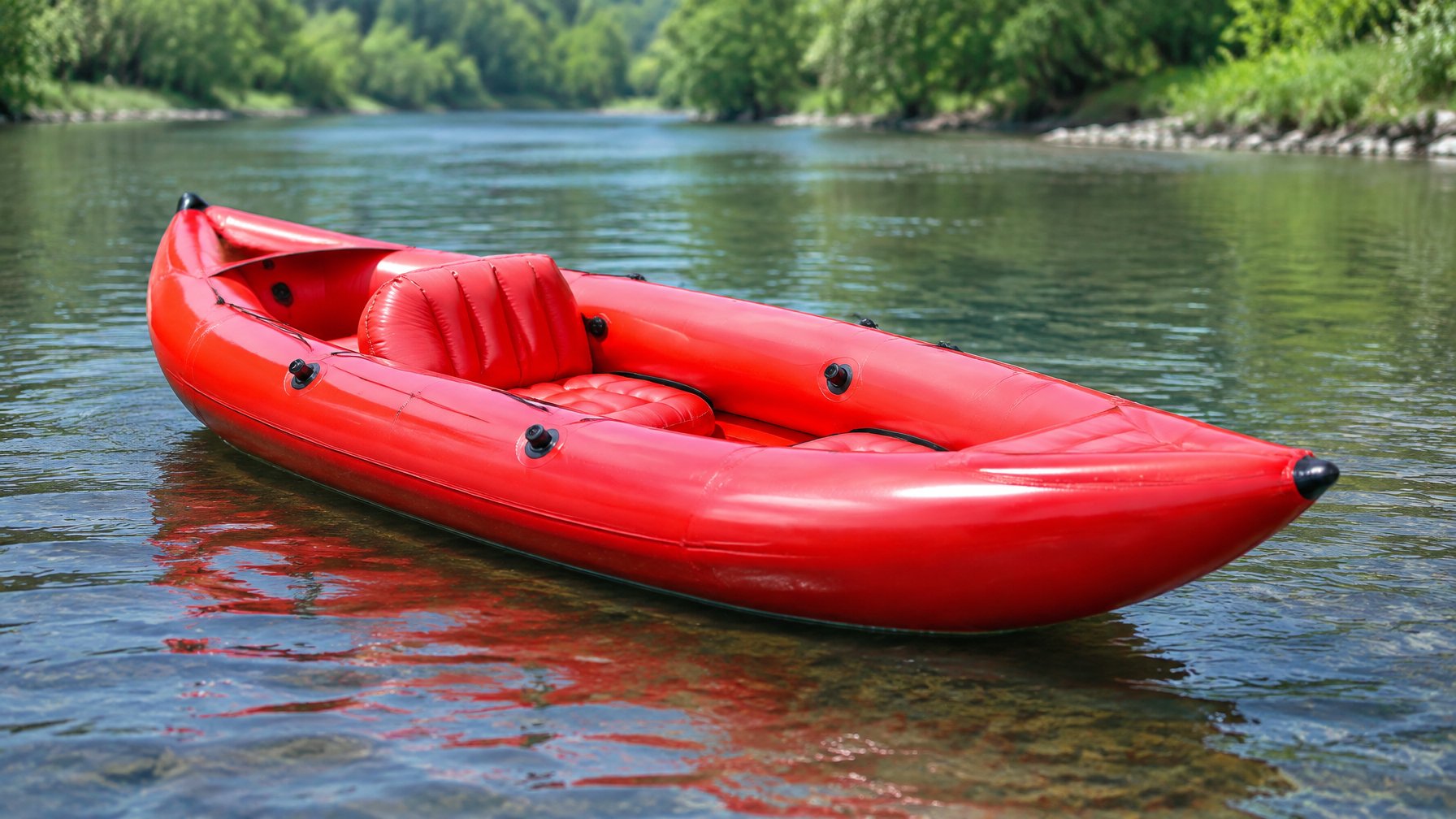
Most beginner inflatables are strictly flatwater craft. The Driftsun Rover 220 is different. Its self-bailing design (holes in the floor that drain water) and reinforced PVC construction can handle Class I-III rapids. I tested it on a mild whitewater section of the St. Croix River, and it performed better than I expected.
The front and rear spray skirts keep water out during choppy conditions. It’s overbuilt for calm lakes, but if you think you might graduate to river running, this is the only beginner inflatable that won’t hold you back.
Specs: 12.5 feet long, 450-pound capacity, 28 pounds, self-bailing design
Best for: Aspiring whitewater paddlers, river runners, adventurous beginners
5. AquaGlide Cirrus 110, Best Premium Solo
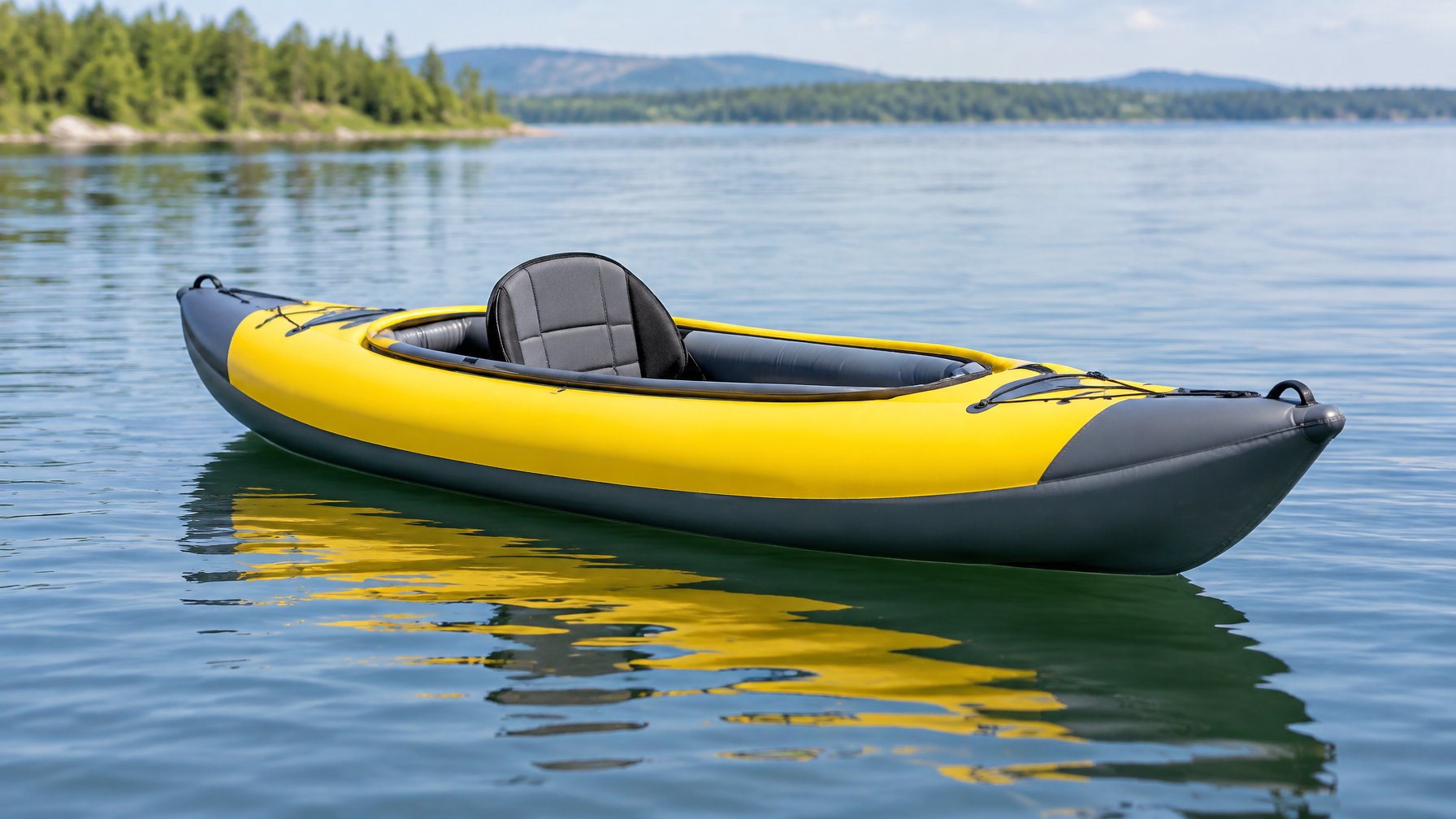
The AquaGlide Cirrus 110 is what you buy when you’re serious about paddling but not ready to commit to a hard-shell. The drop-stitch floor is rock-solid, you can stand on it without flexing. The tracking is so good that I forgot I was in an inflatable during a 3-hour paddle on Lake Itasca.
At $800, it’s not cheap, but it paddles like a $1,200 hard-shell. The seat is genuinely comfortable for all-day trips, and the storage hatches keep your gear dry. If you’re committed to paddling regularly but need the convenience of an inflatable, this is your kayak.
Specs: 11 feet long, 300-pound capacity, 24 pounds, drop-stitch floor, dry storage hatches
Best for: Serious beginners, regular paddlers, those wanting near-hard-shell performance
Quick Comparison
| Kayak | Price | Capacity | Weight | Best For |
|---|---|---|---|---|
| Intex Challenger K1 | $150 | 220 lbs | 27 lbs | Budget beginners |
| Sevylor QuickPak K5 | $250 | 250 lbs | 30 lbs | Travelers |
| Advanced Elements Island Voyage 2 | $550 | 400 lbs | 32 lbs | Couples/tandem |
| Driftsun Rover 220 | $600 | 450 lbs | 28 lbs | Whitewater |
| AquaGlide Cirrus 110 | $800 | 300 lbs | 24 lbs | Premium solo |
Frequently Asked Questions
Common Questions
Are inflatable kayaks safe for beginners?
Yes, modern inflatable kayaks with multiple air chambers are very safe. Quality models use durable PVC or rubber construction that resists punctures. Always wear a life jacket and check weather conditions before paddling.
How long do inflatable kayaks last?
With proper care, a quality inflatable kayak lasts 5-10 years. Store it dry and out of direct sunlight. Rinse after saltwater use. Budget models may last 2-3 years with regular use.
Can I take an inflatable kayak on a plane?
Most inflatable kayaks deflate to duffel bag size and can be checked luggage. The Sevylor QuickPak is specifically designed for this. Always check airline weight limits, most kayaks are under 35 pounds.
Do I need a life jacket for an inflatable kayak?
Absolutely. Every state requires a Coast Guard-approved life jacket for kayaks, including inflatables. Inflatable kayaks are not exempt from PFD laws. See our guide to the best kayak life jackets for recommendations.
What’s the difference between drop-stitch and standard inflatable floors?
Drop-stitch floors have thousands of threads connecting the top and bottom layers, creating a rigid surface that feels like a hard floor. Standard inflatable floors are just air chambers, comfortable but flexy. Drop-stitch dramatically improves paddling performance.
Final Verdict
For most beginners, the Intex Challenger K1 is the smart starting point. It’s affordable, includes everything you need, and lets you discover if kayaking is your thing without a major investment. If you paddle regularly for a season and want to upgrade, the AquaGlide Cirrus 110 is worth the splurge.
Whatever you choose, remember that the best kayak is the one that gets you on the water. Don’t overthink it. Order one this week, inflate it in your backyard, and start exploring. The lakes are waiting.
