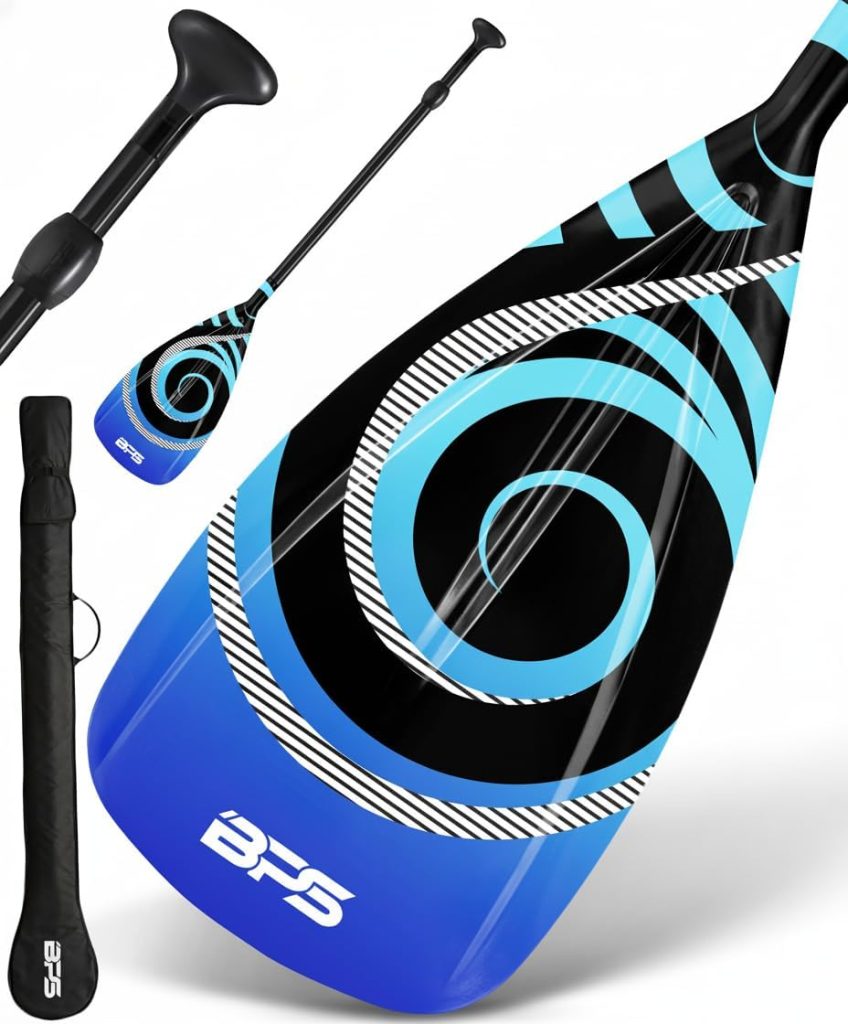
The short answer: the BPS Alloy 2-Piece SUP Paddle is the best budget paddle for recreational paddlers, and our verdict is 4.5 out of 5. If you paddle a few times a month on flat water and gentle chop, it delivers everything a $250 carbon paddle delivers, at a fraction of the price. The only reason to spend more is weight. In this review we break down the specs, what thousands of owner reviews consistently report, the flaws you should know about, and who should skip it.
What You Get in the Box
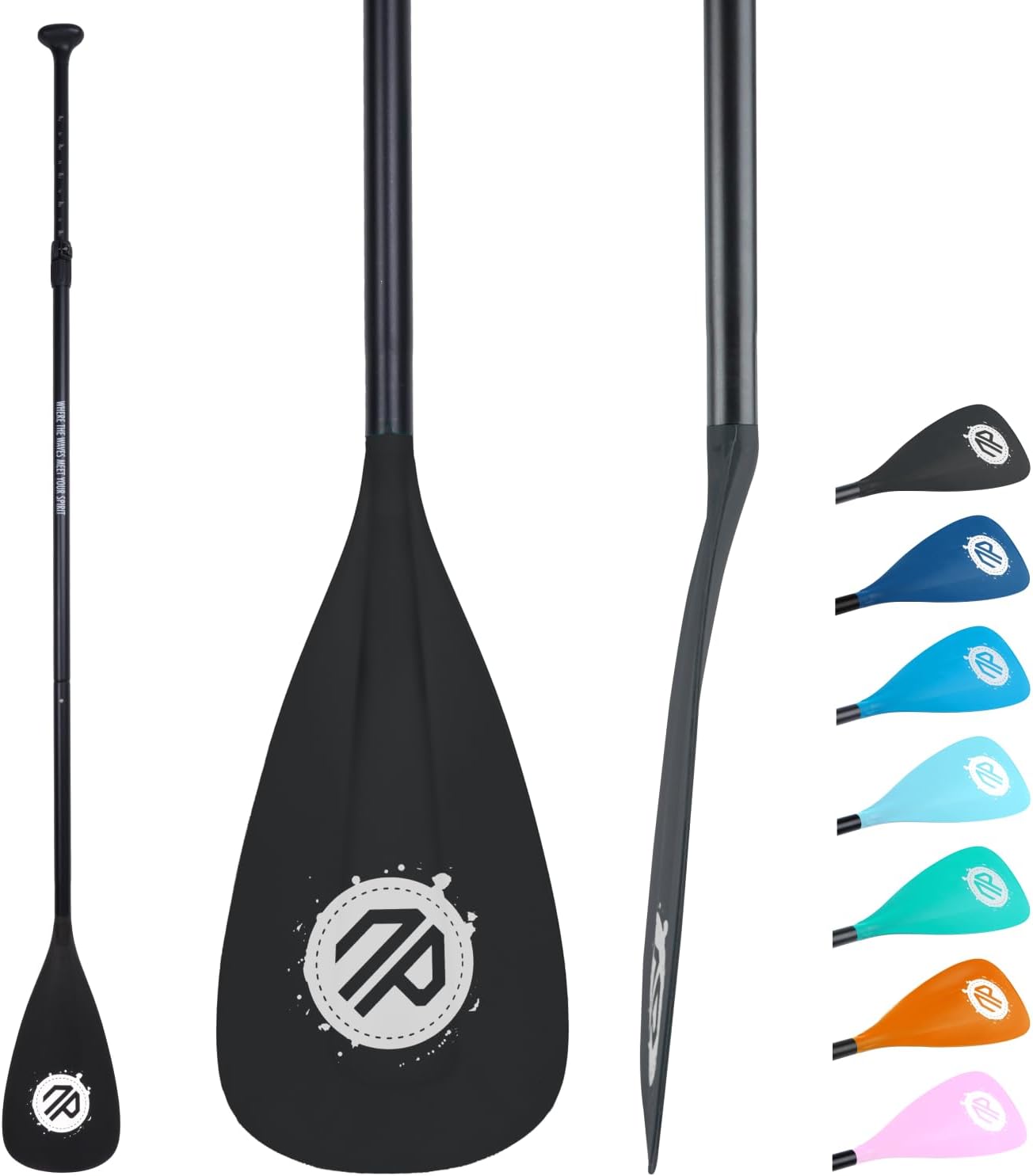
The BPS New Zealand Alloy 2-Piece SUP Paddle arrives as a two piece aluminum paddle with a nylon blade, an ergonomic T-grip handle, and a carry bag. The two pieces separate with a simple snap button, so the longest section is about 60 inches and fits inside most board bags and car trunks. BPS also includes a digital paddle care e-guide on the listing, and the brand backs the paddle with its “Right Choice” guarantee: if you are unhappy or hit a quality problem, they replace it or refund it, your pick.
One detail matters more than it sounds: the paddle floats when assembled. Owners repeatedly mention dropping it during a swim and watching it bob next to the board instead of sinking to the bottom. That single feature has saved more paddles than any leash.
BPS New Zealand Alloy 2-Piece SUP Paddle
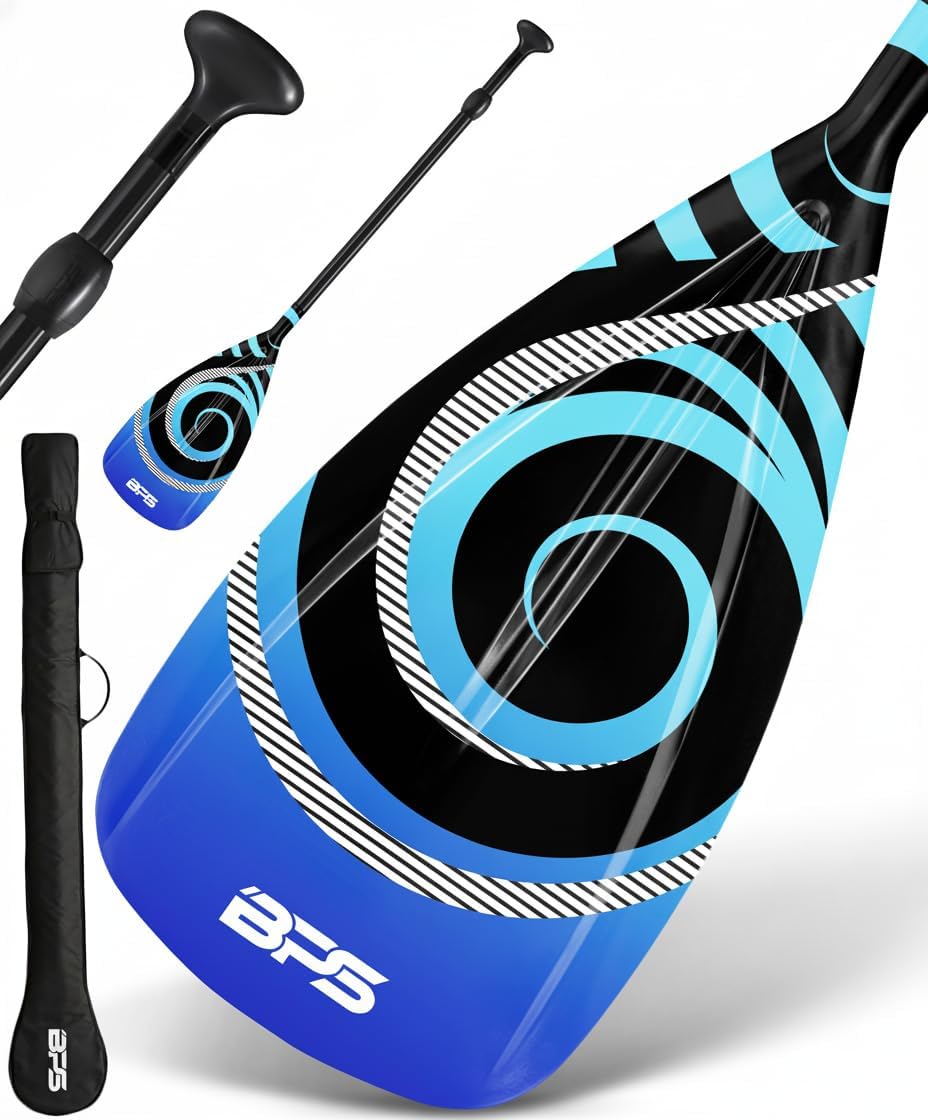
This is the paddle we recommend to friends who just bought their first board and do not want their gear bill to double. The BPS Alloy SUP paddle holds a 4.6 star average across roughly 2,600 Amazon ratings, which is an unusually deep track record for a budget paddle, and the rating has stayed stable across years of sales. It comes in a handful of blade designs, so you can match your board without paying a design premium.
Where it wins is honesty: nothing on this paddle pretends to be premium. The shaft is aluminum, the blade is nylon, the adjustment is a simple clasp, and every one of those choices is exactly right for a recreational paddler. Where it loses half a point in our verdict: the shaft flexes slightly under hard acceleration, which bigger or faster paddlers notice on sprints.
Shaft, Blade, and Handle: How It Paddles
The shaft is aircraft grade aluminum with a matte finish that grips well with wet hands. The blade is a nylon composite with a slight angle, which keeps the blade vertical through the power phase of your stroke, and reviewers consistently describe the bite as smooth rather than grabby. The T-grip handle is sized for average hands and does not create hot spots over a two hour session, a complaint that shows up constantly in reviews of cheaper paddles and barely appears here.
The nylon blade is also the durability story. Carbon blades chip and crack when they hit rocks; this one flexes, scuffs, and keeps going. Owners report seasons of use on rocky lakes and shallow rivers with nothing worse than cosmetic marks.
Adjustability and Sizing
The paddle adjusts from 65 to 83 inches (1650 to 2100 mm) with a locking clasp that sets in seconds and stays put. That range covers paddlers from about 5 feet to 6 foot 4, which makes it the obvious choice for households where two or three people share one board. A common rule of thumb is paddle length about 8 to 10 inches above your height; the BPS range covers that comfortably for almost everyone.
Sharing matters more than most buyers expect. A fixed length paddle is a great fit for one person and a wrong fit for everyone else. If your paddle lives in a closet and comes out when friends visit, adjustability is not a convenience, it is the feature.
Weight and Fatigue on Long Sessions
At 2.1 pounds assembled, the BPS Alloy is about half a pound to a pound heavier than entry carbon paddles. On a 45 minute cruise you will never think about it. On a three hour touring day or against a headwind, the extra swing weight adds up, and this is the single honest reason to consider the carbon fiber version instead. If your sessions stay under two hours, the alloy is the right call and the money you save buys a better leash and PFD.
BPS Carbon Fiber SUP Paddle: The Step-Up
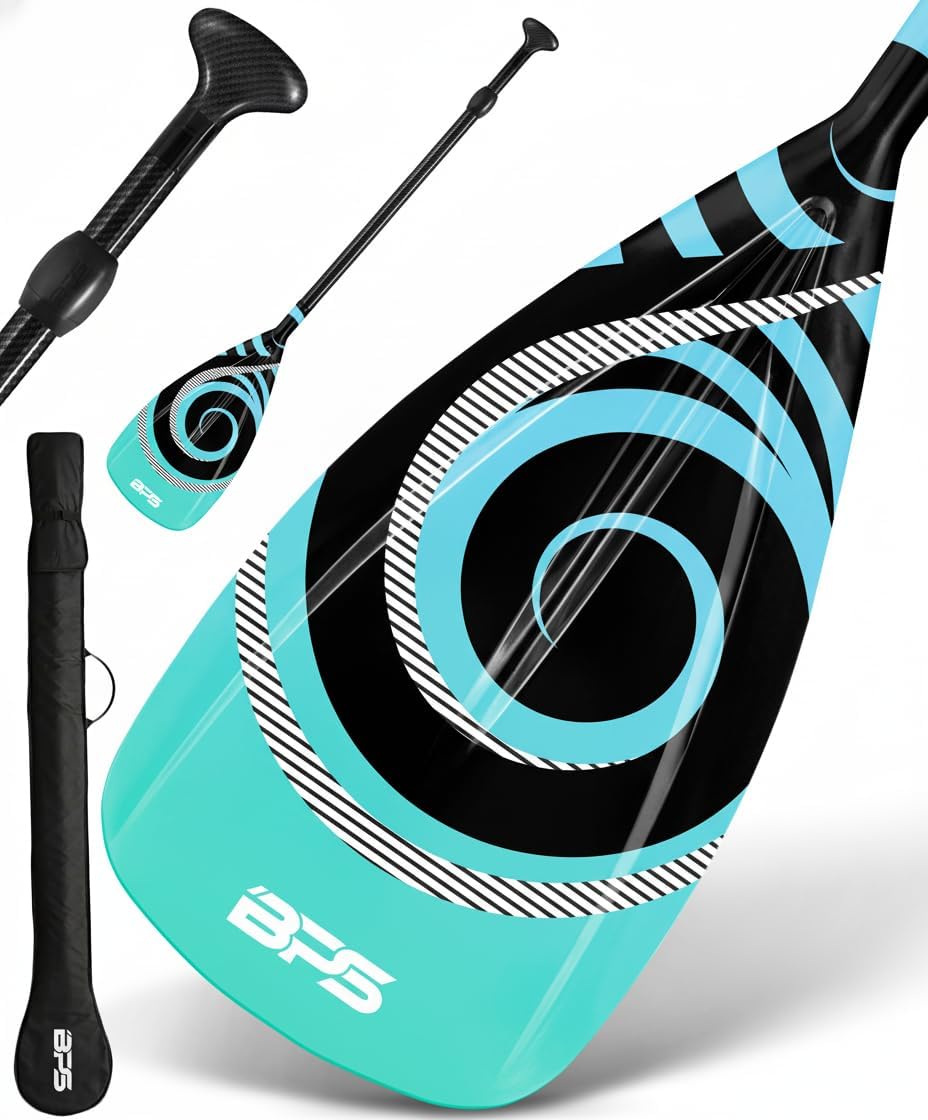
If you paddle weekly, tour long distances, or race casually, the BPS 2-Piece Carbon SUP Paddle is the same design language in a lighter package: carbon fiber shaft, nylon blade for durability, the same 65 to 83 inch adjustment range, and the same float-when-assembled promise. It carries a 4.5 star average across about 280 ratings. You pay noticeably more and you get a paddle that disappears in your hands on hour three instead of reminding you it exists.
The honest math: if you paddle fewer than ten times a season, the alloy saves you real money for zero practical difference. If you paddle every weekend, the carbon pays you back in shoulders.
Niphean Convertible SUP and Kayak Paddle
If your garage holds a paddle board and a sit-on-top kayak, the Niphean convertible paddle splits into three or four pieces and swaps between a SUP blade and a kayak blade, so one purchase covers both boats. It carries a 4.0 star average across about 1,700 ratings, a solid record for a convertible, though reviewers note the extra connection points add a touch of flex compared to a one-piece shaft.
It does not match the BPS alloy’s value as a pure SUP paddle, but if you genuinely split time between a board and a kayak, buying one convertible beats buying two dedicated paddles you have to store.
One more niche worth knowing: the BPS 3-piece with the unique lock design packs down smaller than anything else in this guide, which makes it the pick for plane travel and inflatable board bags.
Who Should Buy the BPS Alloy (and Who Should Not)
Buy it if: you are a beginner or recreational paddler, you share a board with family, you paddle lakes and slow rivers, or you want a beater paddle that survives rocky put-ins without anxiety. This is most paddlers, most of the time.
Skip it if: you tour more than three hours at a stretch, you race, or you already know you want one premium carbon paddle for the long haul. In that case go straight to the carbon version and never look back.
The transformation here is straightforward: the paddler who buys right the first time spends the season on the water instead of in the returns queue. The one who buys twice spends the season’s budget on shipping labels.
Frequently Asked Questions
Is the BPS Alloy SUP paddle good for beginners? Yes, it is one of the best beginner paddles on the market because the adjustability covers growing skills and shared boards, the nylon blade forgives rocky mistakes, and the float feature protects your investment when you fall.
Does the BPS Alloy paddle really float? Yes, when assembled. BPS guarantees the assembled paddle floats, and owner reviews back it up across thousands of sessions. Disassembled pieces can sink, so keep it together on the water.
What length should I set my SUP paddle to? A reliable starting point is 8 to 10 inches above your height for general paddling, a touch shorter for surfing, and a touch longer for racing. The BPS adjusts from 65 to 83 inches, so the whole range is available in seconds.
Is an aluminum SUP paddle too heavy? At 2.1 pounds, the BPS Alloy is heavier than carbon but light enough for sessions up to about two hours without fatigue. Longer touring days are where the carbon version earns its price.
What is the warranty on BPS paddles? BPS sells through its Barrel Point Surf family business and backs paddles with a “Right Choice” guarantee: if you are unhappy or hit a quality issue, they replace or refund, your choice.
Verdict: for the vast majority of recreational paddlers, the BPS Alloy 2-Piece SUP Paddle is the smart first paddle and the smart only paddle. Check the current price and the color options, then get on the water.
