
You have one night on the river and one raft to carry everything. Here is the whole system in four lines: pack everything in waterproof dry bags, split your gear into a day bag, an overnight bag, and shared kitchen bags, keep heavy gear low and centered in the raft, and strap every single bag down before the first rapid. Get those four things right and you will sleep dry, eat hot food, and rig in minutes at camp. This guide walks you through each bag, the gear that earns its place, the load order, and the five mistakes that sink first overnight trips.
The Bag System: Three Bags, Zero Wet Sleeping Bags
The biggest packing error on an overnight rafting trip is treating your luggage like car camping gear. On the river, every bag must survive a swim. That means dry bags, not duffels, and it means splitting your kit by when you need it, not by category.
Use three layers. First, a small day bag of 5 to 10 liters that stays clipped to your PFD or the raft frame within arm’s reach: sunscreen, snacks, a layer, your phone in a waterproof case. Second, a 20 to 30 liter overnight bag with your sleep clothes, camp layer, and toiletries: it comes off the raft once, at camp. Third, shared kitchen and group bags that the whole crew loads and unloads together. When a bag has one job, you never dump twelve dry bags on a beach to find one jacket.
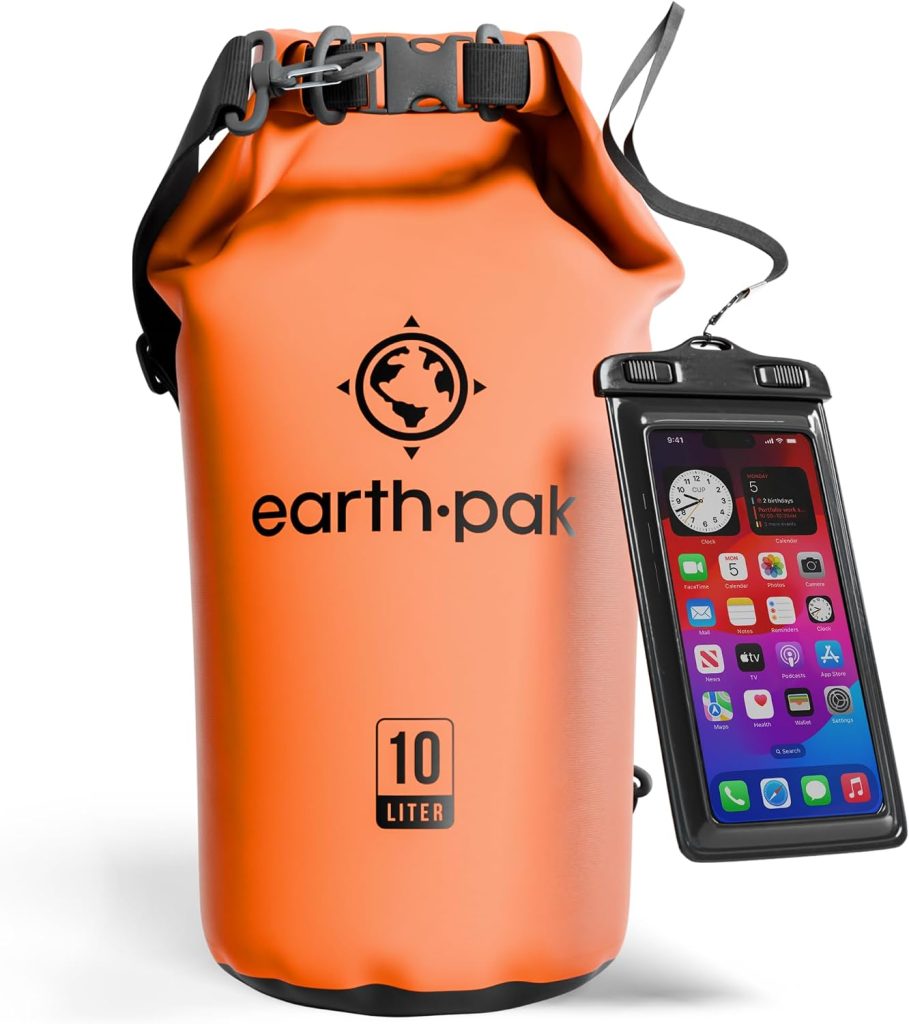
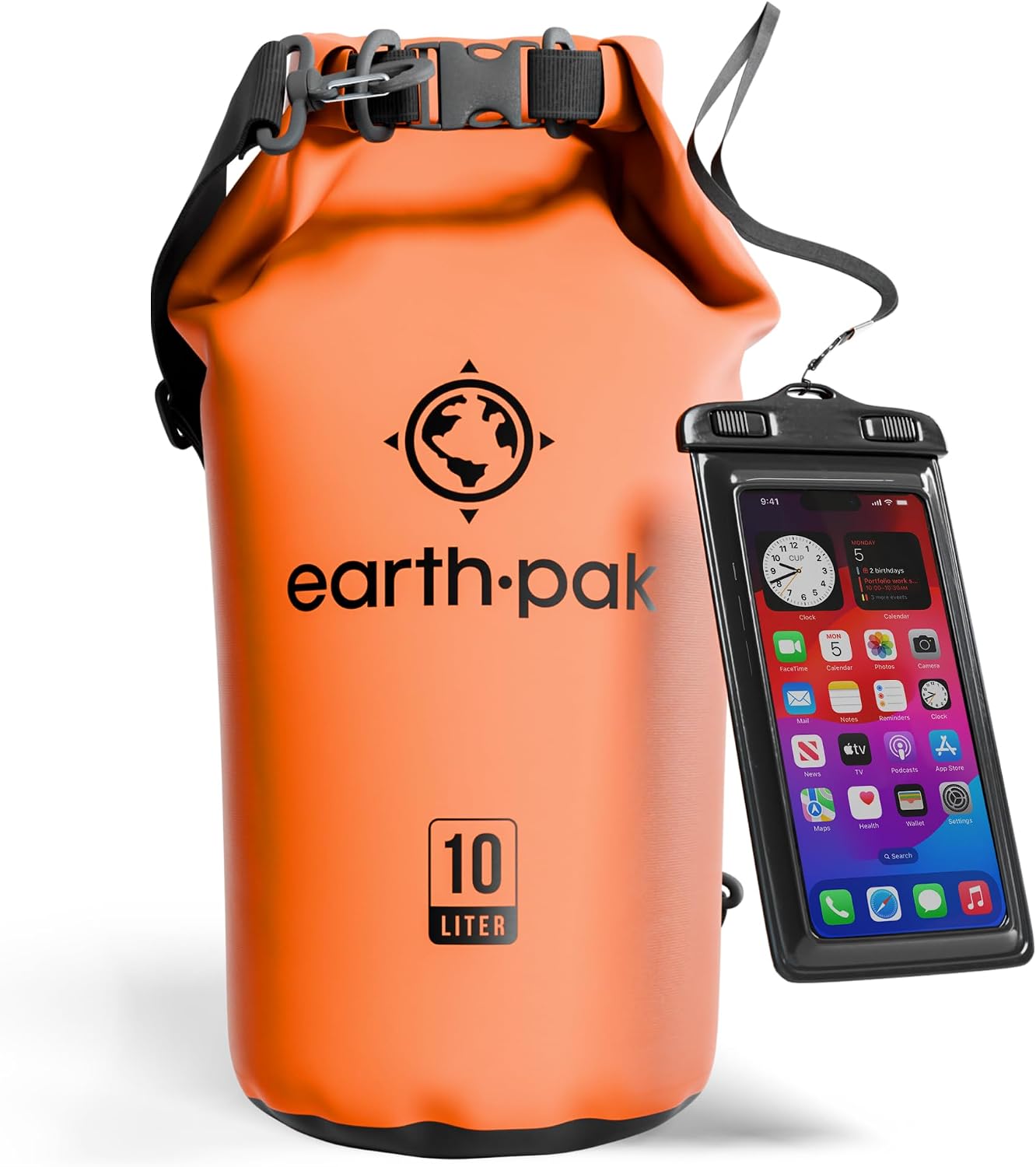
For the system to work, every bag needs to be a real dry bag with a roll top closure, not a garbage bag inside a duffel. The Earth Pak waterproof dry bag is the model we recommend for this because it comes in sizes from 10 to 55 liters, so the same family of bags covers your day kit, your overnight kit, and your group kitchen, and you can color code them so the whole crew knows which bag is which. It is the single best value in river storage at around $20 for the 10 liter size, and it has held up through seasons of guide abuse.
The payoff is real. Before the trip, you are the paddler who shows up with a duffel and a prayer. After one night with a three bag system, you are the person who pulls one dry bag off the raft at camp and is changed into warm clothes before the fire is lit, while everyone else digs through a shared pile.
What Goes Where: A Checklist for Overnight Rafting
Pack by bag, not by pile. Here is the working checklist our crew uses for a one or two night river trip.
Day bag (5 to 10 liters, stays with you): sunscreen, lip balm, sunglasses with a strap, a lightweight rain shell, snacks, water bottle, phone in a waterproof case, and any medication you cannot afford to lose. If you swim, this bag swims with you.
Overnight bag (20 to 30 liters, comes off at camp): one complete set of camp clothes in a synthetic or wool fabric, a warm mid layer, dry socks and camp shoes, a toothbrush and travel toiletries, a headlamp, and a sleeping bag compressed into its own small dry bag. One honest rule: nothing cotton, because wet cotton at a river camp is a hypothermia risk, not a comfort issue.
Kitchen and group bags (shared): the stove and fuel, a pot and pan, a strainer, a cutting board and one good river knife, food packed in hard-sided or crush-proof containers, a water filter or purification tablets, and a repair kit with tape, spare strap, and a multi-tool. If your crew drinks coffee, the percolator rides in its own padded bag and nobody argues about it.
Safety gear you wear, not pack: your PFD stays on your body any time you are on the water, and a rescue throw bag rides on the raft, not buried in the kitchen. More on both below.
Earth Pak Waterproof Dry Bag: The Workhorse
If you buy one piece of gear from this guide, make it this. The Earth Pak dry bag uses a welded seam PVC body with a roll top and buckle, and it floats, which matters more than people expect when a bag goes overboard. The 500D material shrugs off being dragged across raft tubes and gravel bars, and the shoulder strap on the larger sizes makes the walk from the beach to camp a one-trip job.
It carries a 4.7 out of 5 rating across more than 37,000 reviews, which is about as close to a river consensus as a product gets. Our advice for an overnight trip: one 10 liter for your day kit, one 20 liter for your overnight kit, and a 30 or 40 liter if you are carrying group food. The matching waterproof phone case that ships with it has kept more than one camera alive on a swim.
NRS Compact Rescue Throw Bag
A throw bag is not optional gear on an overnight trip; it is the difference between a ten minute rescue and a very bad story. The NRS Compact throw bag packs 70 feet of floating rope into a bag small enough to clip behind your seat, so it rides every rapid within reach. The mesh panel drains fast after a throw, and the bag repacks in under a minute once you learn the coil.
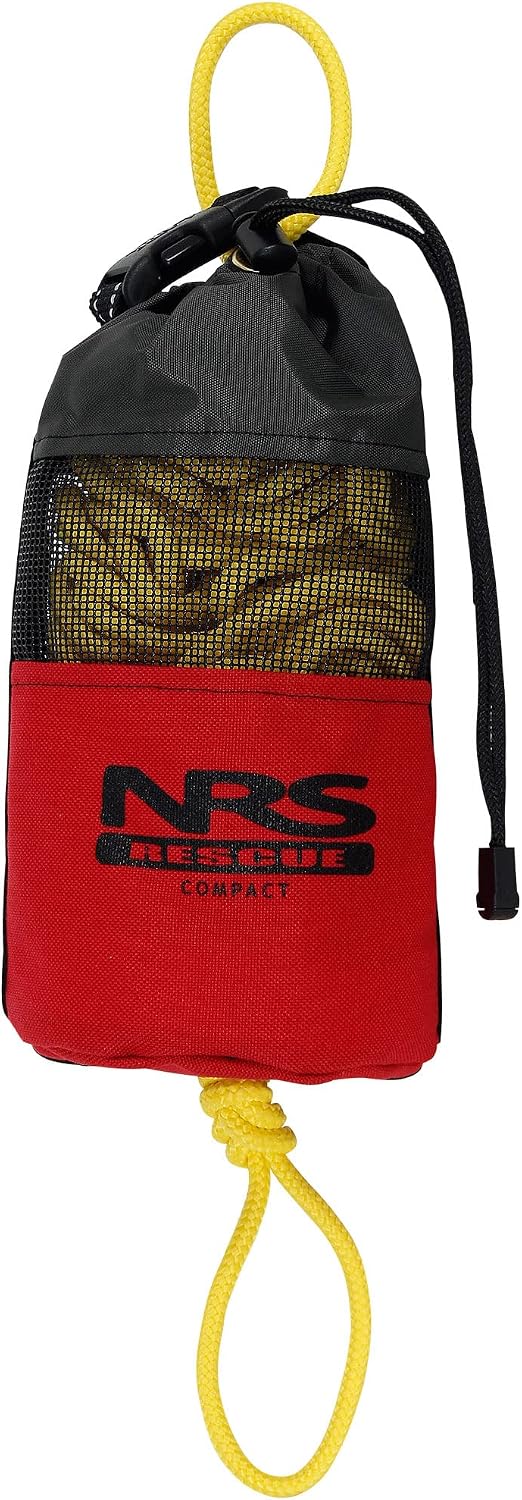
At around $70 with a 4.9 rating across serious river users, this is the cheapest insurance on the water. Practice three throws in flat water before your trip: an underhand lob, a sidearm, and a coil throw. That hour of practice is the whole difference between owning a throw bag and being able to use one.
NRS Titanium Co-Pilot Knife
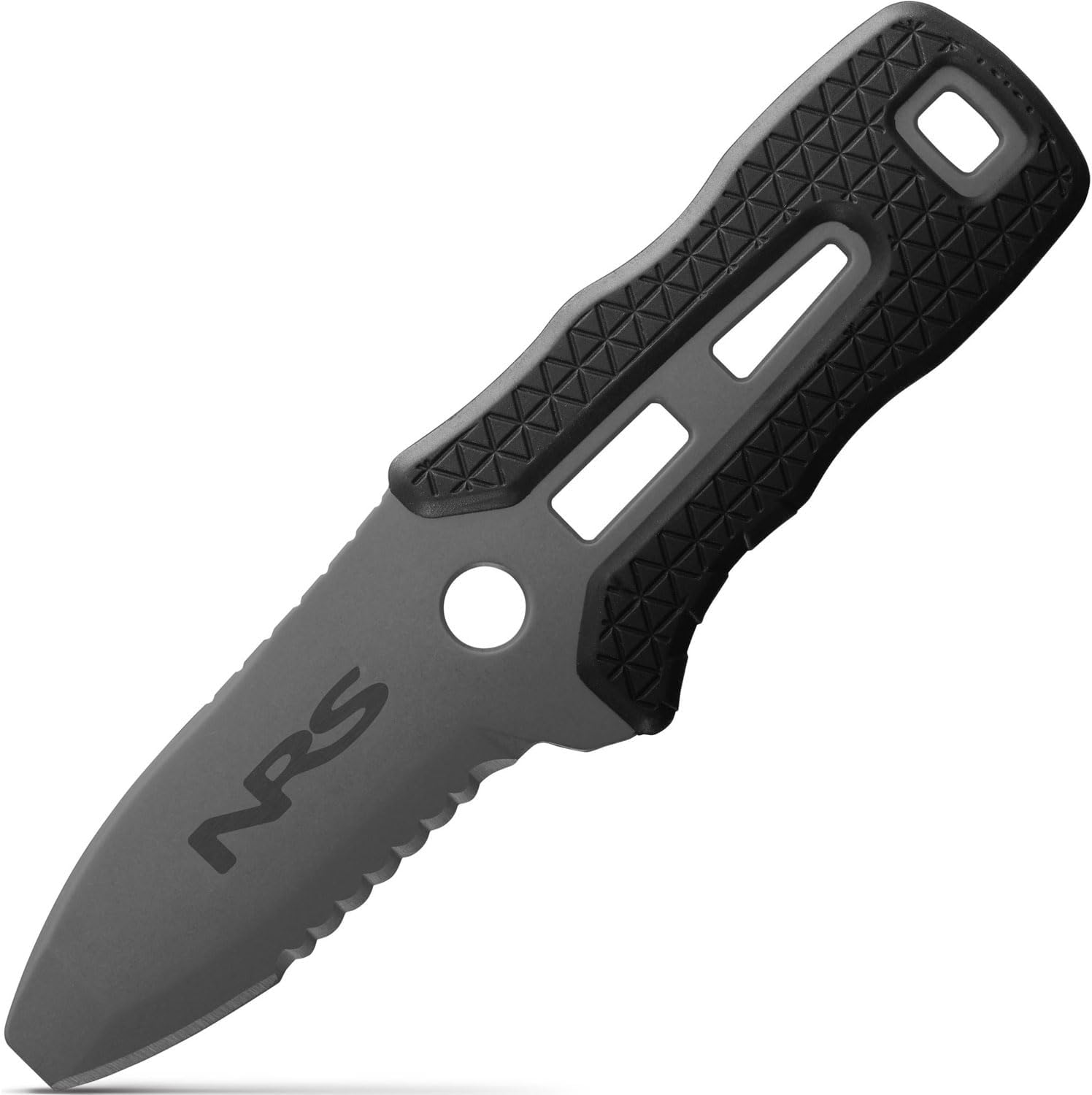
Every overnight raft needs one dedicated river knife, and it belongs on a PFD lash tab, not in the kitchen box. The NRS Titanium Co-Pilot is the crew favorite: a titanium blade that will not rust in river water, a blunt tip that will not stab a raft tube (or a swimmer) during a rescue, and a serrated section that slices rope and strap webbing one handed. The integrated bottle opener has opened roughly one million river sodas.
It is not cheap at about $170, but titanium means you buy it once and hand it down. Cheaper knives dull, rust, and get lost; this one earns its place on every trip.
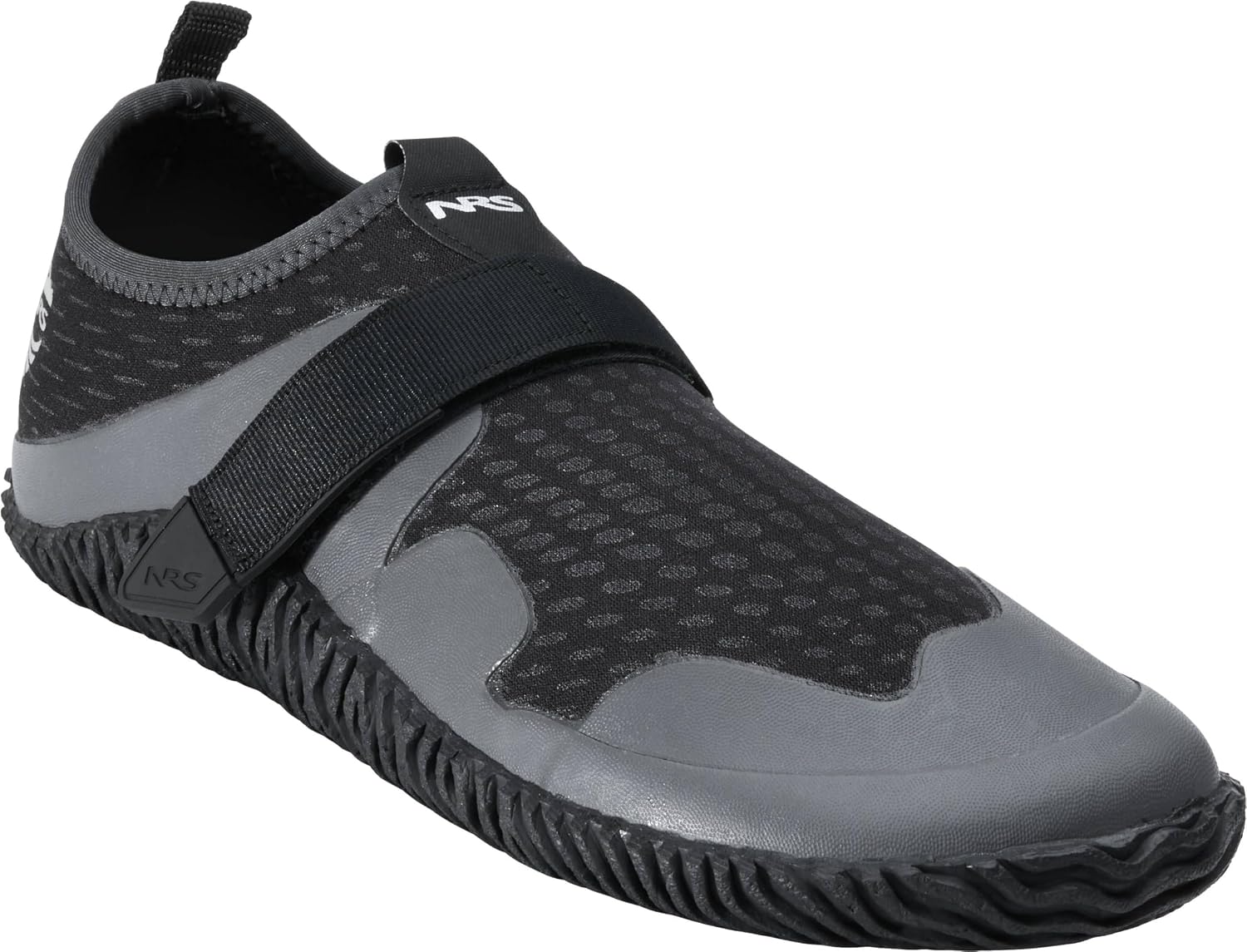
NRS Kicker Wetshoes
You will step into the river a dozen times a day: scouting rapids, dragging the raft onto beaches, wading to the groover. Flip flops get sucked off in the first eddy and bare feet find every sharp rock on the riverbed. The NRS Kicker wetshoe is a 3mm neoprene shoe with a real sole and a strap that keeps it on your foot in current, rated 4.5 out of 5 by paddlers who live in them all season. They work as your only shoe on a summer overnight, or as your on-the-water shoe paired with sandals at camp.
The before and after is simple: paddlers in old sneakers spend the evening nursing bruised arches and wet socks. Paddlers in wetshoes forget their feet exist, which on a river trip is exactly what you want.
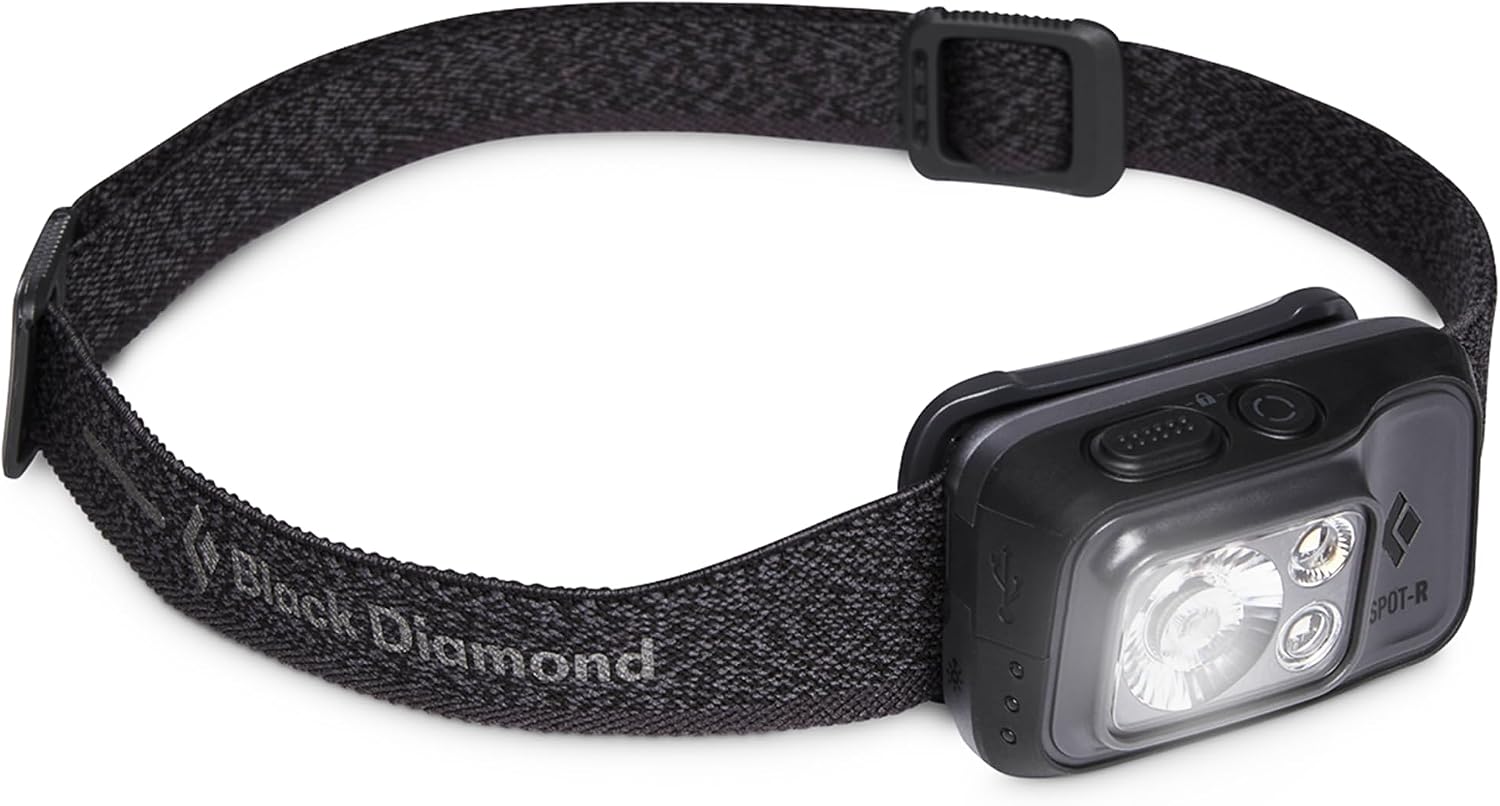
Black Diamond Spot 400-R Headlamp
On an overnight trip, camp happens after dark: rigging boats at the take-out beach, cooking at 9pm, finding the toilet trowel. A phone flashlight drains your only camera and dies in the cold. The Black Diamond Spot 400-R is a 400 lumen rechargeable headlamp with a red mode that saves night vision around the fire, an IP67 rating that shrugs off rain and splash, and a lock mode so it does not turn on inside your dry bag. Bring the USB cable and a small power bank and it will outlast the trip.
Rated 4.4 out of 5, it is the headlamp that ends the nightly battery hunt. Pack one per person, always, because the person without a light is the person holding everyone else’s.
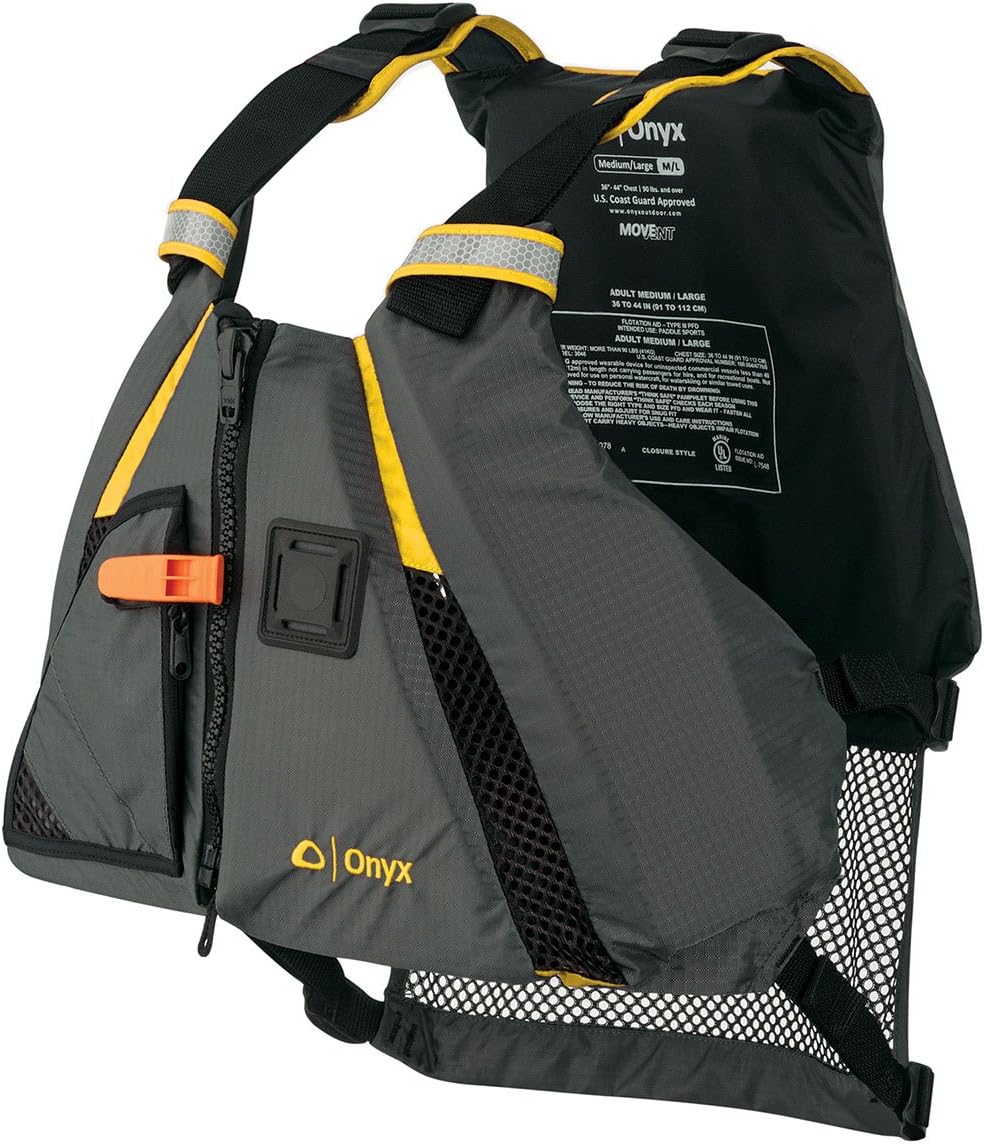
Onyx MoveVent Dynamic PFD
Your PFD is worn gear, not packed gear, and on an overnight trip you will live in it for ten hours a day. The Onyx MoveVent Dynamic earns its spot with mesh ventilation panels that keep you cool on flat midday stretches, a high back that clears a raft seat, and a 4.8 rating across nearly 4,000 reviews. At around $55 it is the best value paddling PFD we have tested, and it has the pockets and lash tabs you need for the knife and whistle.
Check current pricing on the Onyx MoveVent, because it moves with stock. Fit rule: snug enough that it cannot ride up over your ears when a partner yanks the shoulder straps.
Sleeping in a wet cotton hoodie at a river camp is the mistake people make once. Paddling without a properly fitted PFD is the mistake people do not get to make twice. Wear it from put-in to take-out, no exceptions.
WRSI Current Pro Helmet
If your overnight trip includes anything class III or above, a helmet joins the PFD on your body. The WRSI Current Pro is the helmet we put at the top of the class after testing it against the field: a multi-impact shell, an interchangeable liner that actually fits different head shapes, and drain geometry that keeps it planted in aerated water. We covered it in depth in our WRSI Current Pro helmet review, including how it handled a season of whitewater.
The logic of wearing both helmet and PFD on an overnight run is simple: you are far from the road, the water is often bigger than a day trip, and a head injury two days from the nearest hospital is the scenario this whole packing system exists to prevent.
Load Order and Rigging: Heavy Low, Everything Strapped
How the bags sit in the raft matters as much as what is in them. Load the heaviest dry bags first, flat on the floor of the raft, centered on the centerline. Weight up high makes a raft twitchy in waves; weight low and centered makes it predictable. Then stack lighter bags on top, with the day bag last and accessible.
Every bag gets two cam straps over the top, even the ones that “will not go anywhere.” A bag in an open rapid becomes a 30 pound projectile aimed at the person in front of you. Straps are cheap, and the same discipline that keeps your throw bag reachable applies to every dry bag on the boat. Follow the two-per-bag rule and you can run the biggest rapid of the day without a single thing moving.
The Five Mistakes That Sink Overnight Trips
1. The giant cooler. A 120 quart cooler for one night feeds a raft of eight and weighs 150 pounds loaded. For a one or two night trip, pack food in crush-proof dry boxes and soft coolers sized to the meal plan. Your back and your load order both improve.
2. Cotton anything. Cotton jeans, cotton hoodies, cotton socks. Once wet, cotton steals heat for the rest of the trip. Synthetics or wool only, for everything that touches your body.
3. Unstrapped bags. See above. One loose bag in a hole can break a nose or open a seam. Strap everything, every day, even flat water mornings.
4. The single big bag. One giant dry bag means the whole raft unloads to find one jacket. Three right-sized bags per person beats one monster every time, which is the argument for the Earth Pak size range covered above.
5. Glass and loose cans. Glass is banned on most rivers for a reason: a broken bottle in a footwell is a trip-ending laceration two days from a hospital. Decant everything into reusable bottles at home.
Avoid these five and your first overnight will feel like your fifth. Ignore them and you will spend the night cold, hungry, or worse, telling the story for years in a way that is not funny yet.
Frequently Asked Questions
Can I use garbage bags instead of dry bags? No. Garbage bags tear on raft frames and gravel, the ties come open in a swim, and they cannot be strapped down without ripping. A real roll top dry bag like the Earth Pak costs about $20 and survives seasons.
Should I bring a cooler on an overnight rafting trip? For one night, a small soft cooler for the first evening’s food is plenty. For two or more nights, a hard cooler becomes worth its weight if you size it to the crew and strap it low and centered.
What happens to my gear if the raft flips? Anything strapped down stays with the raft, which is why rigging matters more than any single item. Anything in your day bag that is clipped to you stays with you. Everything loose is gone, possibly for good. Pack and rig assuming a flip, because that assumption is what a flip tests.
How many dry bags should each person bring? Three: a 5 to 10 liter day bag, a 20 to 30 liter overnight bag, and a small dry bag dedicated to the sleeping bag. Add one group kitchen bag per four people.
How do I handle the toilet situation on an overnight trip? Bring a portable toilet system or a groover as required by the river’s regulations, plus a trowel and pack-out bags where mandated. Your outfitter or the land manager’s website lists exactly what is required, and leaving no trace is non-negotiable on overnight water.
You now have the bag system, the checklist, the load order, and the mistake list. The only thing left between you and a dry, hot dinner on a beach under the stars is the gear itself. Start with the dry bags, add the throw bag, and you are most of the way packed.
